
What if the C$500 repair bill you just paid is actually the most expensive mistake you will make this winter? It is a common worry for many in the Tri-Cities and across the province. You want to keep your home warm without drained savings, yet those unpredictable sounds from the basement suggest your heating system is on its last legs. We understand the frustration of rising energy bills and the fear of a total breakdown during a January freeze. Deciding exactly when to replace furnace BC units can feel like a gamble between high upfront costs and the risk of being left in the cold.
You deserve a home that stays comfortable without constant maintenance stress. This guide provides a clear, honest framework to help you decide whether to fix your current system or invest in an upgrade. We will show you how to qualify for 2026 CleanBC rebate opportunities to maximize your savings, potentially securing thousands of dollars in provincial incentives. By the end of this article, you will have a professional roadmap for choosing a high-efficiency system that ensures reliable warmth and lower monthly costs for the next 15 years.
Key Takeaways
- Learn why the 15-year mark is the critical turning point for home heating and how to spot the early warning signs of a failing system.
- Use the “50% Rule” and the Age x Repair Cost formula to make a data-driven decision between a quick fix and a full replacement.
- Understand how to navigate 2026 CleanBC rebate requirements to ensure you maximize your savings when to replace furnace BC systems.
- Evaluate the pros and cons of high-efficiency gas furnaces versus modern electric heat pumps tailored for the unique BC climate.
- Follow a professional step-by-step roadmap to ensure your next heating system provides reliable comfort and lower bills for the next 15 years.
Recognizing the Signs: When to Replace a Furnace in BC
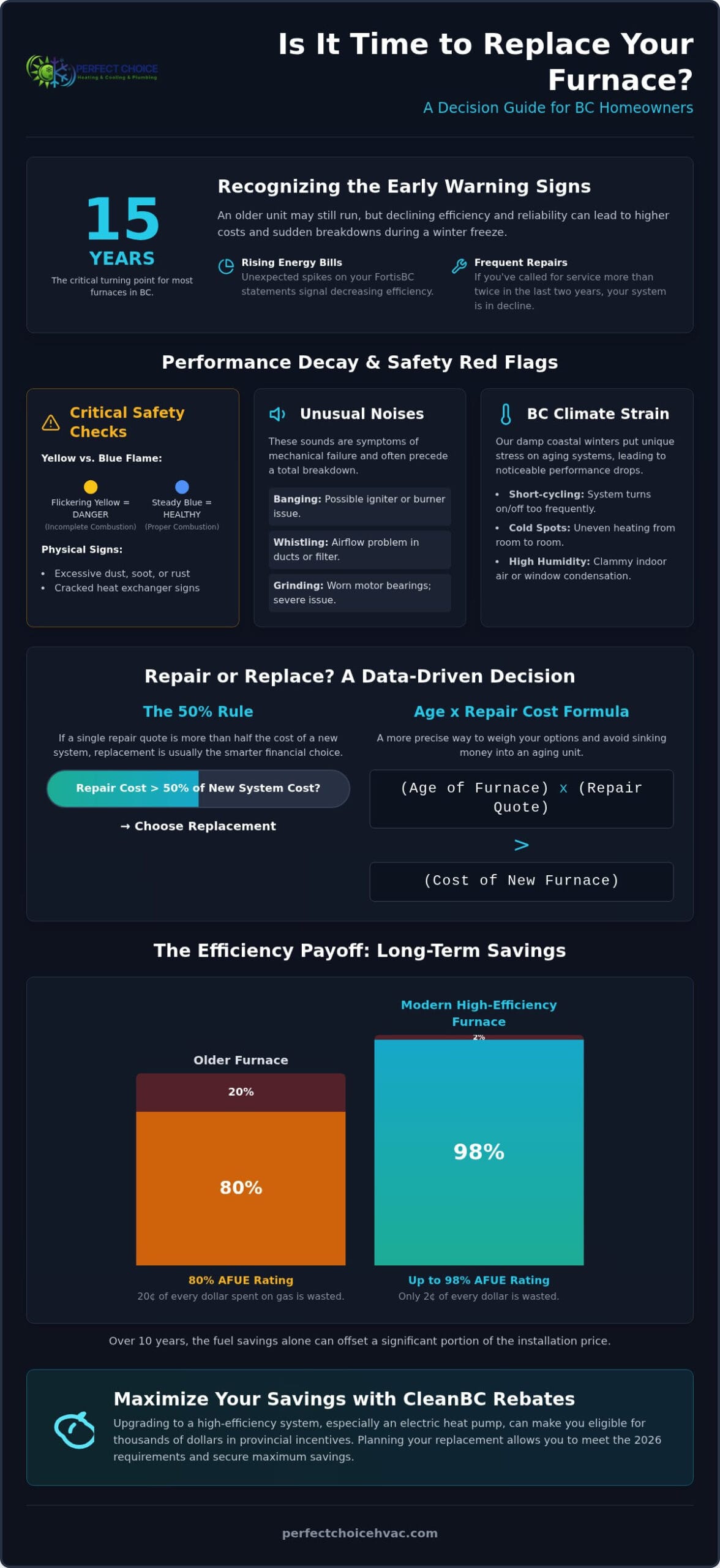
Understanding when to replace furnace BC systems often starts with a simple look at the calendar. Most residential units have a functional lifespan of 15 to 20 years. However, in our local climate, the 15-year mark is a critical turning point. While your unit might still be running, its internal components are likely reaching the end of their reliable service. Modern high-efficiency models offer significantly better performance, meaning an older unit is often costing you more in monthly utility bills than it’s worth to keep.
Watch your FortisBC statements for unexpected spikes. If your energy consumption is climbing while your heating habits stay the same, your furnace is losing its ability to convert fuel into heat efficiently. We also suggest following the “twice in two years” rule. If you’ve had to call a technician for repairs more than twice in the last 24 months, you’re likely dealing with a system in terminal decline. These mounting costs are often a sign that a full replacement is the more financially sound path forward.
Physical Red Flags and Safety Concerns
Safety should always be your primary concern when evaluating an aging system. A healthy gas furnace should produce a steady, crisp blue flame. If you notice a flickering yellow flame, it’s a sign of incomplete combustion and a potential carbon monoxide hazard. You should also inspect the area around the furnace cabinet for excessive dust, soot, or streaks of rust. These physical signs often point to a cracked heat exchanger or venting issues that require immediate attention. Understanding How furnaces work can help you realize that unusual noises like banging, whistling, or grinding aren’t just annoyances; they are symptoms of mechanical failure. Don’t ignore these sounds, as they usually precede a total system breakdown.
Performance Decay in the Lower Mainland Climate
Our damp coastal winters put a unique strain on local heating systems. Older furnaces often struggle to manage the high humidity levels found in BC, leading to a clammy feeling indoors or persistent condensation on your windows. If you notice cold spots in certain rooms or find yourself constantly adjusting the thermostat, the blower motor or ductwork may no longer be up to the task. Short-cycling is a specific performance issue where your furnace turns on and off too frequently, which prevents the home from reaching a consistent temperature and wastes a significant amount of fuel. This repetitive starting and stopping puts immense stress on the igniter and motor, often leading to the very mid-winter breakdowns that homeowners fear most.
The Repair vs. Replace Calculation: The 50% Rule
Deciding when to replace furnace BC systems doesn’t have to be a guessing game based on gut feelings. We use the “50% Rule” as a foundational guideline for our clients. If a single repair quote exceeds half the value of a brand-new, high-efficiency system, investing in the old unit rarely makes financial sense. You are essentially paying a premium to keep an obsolete machine on life support. For smaller issues on newer units, choosing furnace repair Port Coquitlam is usually the more practical path to restoring your comfort.
A more precise way to look at this is the Age x Repair Cost formula. Multiply the age of your furnace by the cost of the proposed repair. If the result is greater than the cost of a new furnace, replacement is the logical choice. This calculation helps you visualize whether you are actually saving money or just delaying the inevitable. Keeping an old unit often carries hidden costs, such as higher monthly gas bills and the ongoing anxiety of a potential breakdown during a cold snap.
Calculating Your Long-Term Savings
Efficiency ratings, known as AFUE, play a massive role in your total cost of ownership. Many older furnaces in BC operate at roughly 80% efficiency, meaning 20 cents of every dollar you spend on gas is wasted. Modern units reach up to 98% efficiency. Over a 10-year period, the fuel savings alone can offset a significant portion of the installation price. You must also factor in the recurring expense of emergency heating repair Coquitlam. These service calls often happen at the most expensive times, such as weekends or holidays, quickly eroding any perceived savings from keeping your old equipment.
The Opportunity Cost of Waiting
Delaying a necessary replacement often leads to a mid-winter emergency when HVAC companies are at their busiest. You might find yourself waiting days for a technician while your home temperature drops. There is also a growing risk of parts for older models becoming obsolete or prohibitively expensive to ship. If you aren’t ready for a full upgrade today, remember that consistent annual maintenance can defer replacement by identifying small issues before they become catastrophic failures. If you need a clear second opinion on your system, schedule a professional assessment with our local team to see where your furnace stands.
BC-Specific Considerations: Climate and Energy Standards
Living in the Lower Mainland means dealing with a unique set of atmospheric challenges that homeowners in other provinces rarely face. While our winters are relatively mild, the high humidity levels force your heating system to work harder to maintain a dry, comfortable indoor environment. This constant moisture can lead to internal corrosion in older units, making the decision of when to replace furnace BC systems a matter of both comfort and structural integrity. Additionally, BC’s aggressive municipal carbon-reduction goals are gradually shifting the landscape, making high-efficiency and hybrid systems the new standard for local homes.
Hiring a CleanBC registered contractor HVAC specialist is the only way to ensure you are meeting these evolving standards while qualifying for significant provincial incentives. These regulations are designed to reduce the environmental footprint of residential heating, but they also offer a financial silver lining for those who upgrade to verified high-efficiency equipment.
FortisBC and BC Hydro Energy Dynamics
Understanding the balance between natural gas and electricity is essential for any BC homeowner. FortisBC and BC Hydro both utilize tiered pricing structures, meaning your costs can fluctuate wildly depending on your monthly consumption. In the Tri-Cities, we often see sharper temperature swings than in Vancouver. These microclimates require precise furnace sizing to avoid energy waste. To keep your current system running efficiently through these shifts, a professional furnace tune up Coquitlam service is a vital preventative step before the first frost hits. It ensures your system is calibrated for our specific coastal conditions.
Navigating Strata and Permit Requirements
If you live in a townhouse or condo, strata approvals are often the biggest hurdle to a new installation. Many strata corporations have strict bylaws regarding HVAC noise levels and external venting locations to preserve the building’s aesthetic and peace. We frequently see homeowners surprised by these requirements mid-project. Beyond strata rules, municipal permits in Coquitlam and Port Moody are mandatory for any furnace replacement to ensure the work meets Technical Safety BC standards. At Perfect Choice HVAC, we take the stress out of this process by managing the permit applications and providing the documentation your strata council needs for a smooth approval. We believe transparency in the planning phase prevents expensive delays later.
Is a Heat Pump Better Than a Furnace in BC?
Many homeowners currently asking when to replace furnace BC units are discovering that the answer often involves switching to a different technology altogether. While a high-efficiency gas furnace remains a reliable choice, electric heat pumps have become the primary alternative for Lower Mainland residents. The most significant advantage is the dual-benefit functionality. A heat pump provides efficient heating in the winter and high-performance cooling in the summer. This is particularly relevant now that BC building codes require new homes to maintain living spaces below 26°C. For those who aren’t ready to go fully electric, a “hybrid” or dual-fuel system uses a furnace as a backup during rare extreme cold snaps, offering the best of both worlds. You can find a deeper analysis of these systems in our heat pump installation Coquitlam guide.
The CleanBC Rebate Advantage
The financial incentive to switch has never been stronger than it is right now. As of July 6, 2026, income-qualified homeowners can access rebates ranging from C$3,500 to C$13,000 when converting from a fossil fuel furnace to a ducted heat pump. This makes 2026 a pivotal year for home upgrades. Additionally, BC Hydro is offering a limited-time bonus of up to C$1,000 for eligible air source heat pump installations completed and paid for between August 1 and October 31, 2026. These provincial incentives are designed to offset the higher upfront cost of heat pump technology, often bringing the final price close to that of a standard furnace replacement. We can help you navigate these applications to ensure you don’t leave money on the table.
Performance in the Lower Mainland
Modern cold-climate heat pumps are specifically engineered to handle the damp, chilly winters of the Tri-Cities without breaking a sweat. Unlike the “blast” of hot air from a traditional furnace, heat pumps provide a more consistent, gentle flow of warmth that maintains a steady temperature throughout the house. This constant air movement also helps with humidity regulation, which is a major comfort factor in our coastal environment. Switching to a heat pump also significantly reduces your household carbon footprint because the system runs on our province’s renewable hydroelectricity rather than burning natural gas. If you want to see if your home is a candidate for this upgrade, book a professional home assessment with our local team today.
Next Steps: Planning Your Furnace Replacement in Coquitlam
Moving from research to action requires a methodical approach to ensure you don’t miss out on provincial savings or reliable service. The decision of when to replace furnace BC systems often comes down to timing. If you wait until a total breakdown in January, you lose the luxury of comparing options and maximizing rebates. We recommend starting your transition during the late summer or early autumn to avoid the peak season rush and ensure your home is ready for the first frost.
- Step 1: Professional Assessment. If you find your furnace is not working in Coquitlam, a diagnostic visit is your first priority. A local expert can confirm if a repair is viable or if the 50% rule makes replacement the smarter choice.
- Step 2: Rebate Verification. Check your eligibility for CleanBC and BC Hydro incentives. We help you identify which high-efficiency systems qualify for the C$3,500 to C$13,000 rebates currently available in 2026.
- Step 3: Strategic Scheduling. Book your installation before the mid-autumn surge. This ensures you have your choice of equipment and installation dates before technicians are fully booked with emergency calls.
- Step 4: Documentation. Finalize your financing and rebate paperwork. As a CleanBC registered contractor, we handle the technical documentation required to ensure your applications are processed correctly.
What to Expect During Installation
Most furnace or heat pump swap-outs are completed within a single day. Our team arrives with floor protection and specialized tools to ensure your home remains clean throughout the process. We don’t just “drop in” a new unit; we perform a full ductwork calibration to ensure the new blower motor operates at peak efficiency. Once the physical installation is complete, we walk you through the new thermostat settings and handle the warranty registration on your behalf. This ensures you have 15 or more years of protected, reliable comfort.
Financing and Rebate Support
We provide flexible payment options to help manage the upfront investment of a high-efficiency system. Our team specializes in the synergy between CleanBC and BC Hydro programs, helping you stack incentives like the C$1,000 BC Hydro bonus available for late 2026 installations. We take the guesswork out of the paperwork by providing direct assistance with your applications. Our goal is to make the transition to a more efficient home as transparent and stress-free as possible. Schedule your free in-home estimate with Perfect Choice HVAC today.
Secure Your Home Comfort for the Next 15 Years
Deciding exactly when to replace furnace BC systems doesn’t have to be a source of stress. By applying the 50% rule and watching for performance red flags early, you can avoid the chaos of a mid-winter emergency. Upgrading in 2026 isn’t just about avoiding repairs. It’s a strategic move to lock in high-efficiency performance and take full advantage of current CleanBC and BC Hydro incentives. You can turn an aging, costly system into a reliable source of comfort and monthly savings.
Our team is here to simplify the transition. As a CleanBC Registered Contractor with licensed and insured technicians, we provide the expertise needed to navigate complex rebate applications and strata requirements. We also offer Daily Service 7:00 AM–9:00 PM to keep your family safe while you plan your next steps. Don’t wait for a total breakdown to start your journey toward a more efficient home. Book your free furnace replacement estimate in Coquitlam today. We look forward to helping you realize a warmer, more cost-effective winter.
Frequently Asked Questions
How long do furnaces typically last in British Columbia?
Residential furnaces in BC typically last between 15 and 20 years. However, our high coastal humidity often causes internal wear to accelerate once a unit hits the 15-year mark. We recommend a proactive assessment at this stage to avoid unexpected failures during a cold snap. Maintaining your system annually can help you reach the upper end of this lifespan while ensuring safety and efficiency.
Is it better to repair or replace a furnace that is 12 years old?
Deciding whether to repair or replace a 12-year-old unit depends on the specific repair quote and the unit’s overall health. We suggest using the “50% Rule” as a guide. If the repair cost is more than half the value of a new system, replacement is usually the better long-term investment. This is especially true if you want to lock in 2026 rebates before the unit fails completely.
What are the current CleanBC rebates for furnace replacement in 2026?
As of July 6, 2026, income-qualified homeowners can access rebates ranging from C$3,500 to C$13,000 when switching to a ducted heat pump. These incentives are part of the provincial push toward high-efficiency heating. When you are deciding when to replace furnace BC equipment, these rebates significantly lower the upfront cost of modern technology. We can help you verify your eligibility during a professional home visit.
Does BC Hydro offer incentives for switching to a heat pump?
Yes, BC Hydro is currently offering a limited-time bonus rebate of up to C$1,000 for air source heat pump installations. To qualify, your system must be installed and paid for between August 1 and October 31, 2026. This bonus can be combined with other provincial incentives, making this autumn an ideal time to transition from a traditional gas furnace to an electric heat pump system.
Can I replace my gas furnace with an electric one in a strata unit?
You can often replace a gas furnace with an electric heat pump in a strata, but you must first review your specific strata bylaws. Most councils have regulations regarding noise levels and where external units can be placed. We specialize in providing the technical documentation and strata approval assistance needed to ensure your new electric system meets all building requirements without causing friction with neighbours.
What happens if my furnace fails in the middle of a BC winter?
If your system fails during a freeze, our team provides Daily Service 7:00 AM–9:00 PM throughout the Tri-Cities to restore your heat quickly. We prioritize urgent repairs to keep your family safe while evaluating if a permanent replacement is necessary. Having a local expert available at any hour reduces the stress of a mid-winter breakdown and ensures you aren’t left in the cold for long.
How much does a new high-efficiency furnace cost in the Lower Mainland?
The total cost for a new installation depends on the complexity of your ductwork and the specific efficiency rating you choose. While prices vary across the Lower Mainland, investing in a high-efficiency model often qualifies you for thousands in rebates that offset the initial price. We provide transparent, detailed quotes during our free in-home estimates so you know exactly what to expect before any work begins.
Will a new furnace actually lower my monthly energy bills?
A new high-efficiency furnace will definitely lower your energy consumption. Older units often operate at 80% efficiency or lower, meaning 20 cents of every dollar is wasted. Modern systems required in BC must have a minimum AFUE of 95%, with some reaching 98%. This reduction in fuel waste leads to noticeably lower monthly bills from FortisBC or BC Hydro, depending on your chosen fuel source.