Last summer, a Maple Ridge homeowner sat in her living room watching the thermometer climb past 30 degrees, hesitant to even start an AC application. She worried about strict noise bylaws and whether her building’s electrical grid could handle the load. It’s a stressful position to be in. You want to stay cool during our increasingly hot BC summers, but the fear of a flat “no” from your strata council often leads to inaction. You shouldn’t have to choose between comfort and compliance.
We understand the pressure of meeting these requirements. This guide provides the exact roadmap you need to secure strata approval for air conditioning Maple Ridge with confidence. You’ll learn how to manage the 2026 application process, meet local decibel standards, and present technical documentation that eliminates council liability. We will cover everything from required electrical permits to the specific heat pump models that councils are most likely to approve. With 8+ years of hands-on HVAC experience, we’re here to help you get it right the first time.
Key Takeaways
- Understand how to navigate the hierarchy of the Strata Property Act and your building’s specific bylaws. This ensures your application meets every legal requirement from the start.
- Discover why ductless mini-split systems are the most effective choice for securing strata approval for air conditioning Maple Ridge. Their low noise levels and minimal visual impact make them council favourites.
- Master a submission process that starts with a professional site assessment. You’ll learn to provide the technical documentation and unit placements that councils actually want to see.
- Learn practical solutions for common council objections. We cover how vibration isolation pads and strategic unit placement can mitigate noise and aesthetic concerns effectively.
- Partner with a CleanBC registered contractor to organize your paperwork. This ensures your system complies with the latest 2026 municipal electrical permits and provincial safety standards.
Understanding Strata Bylaws and Maple Ridge Regulations
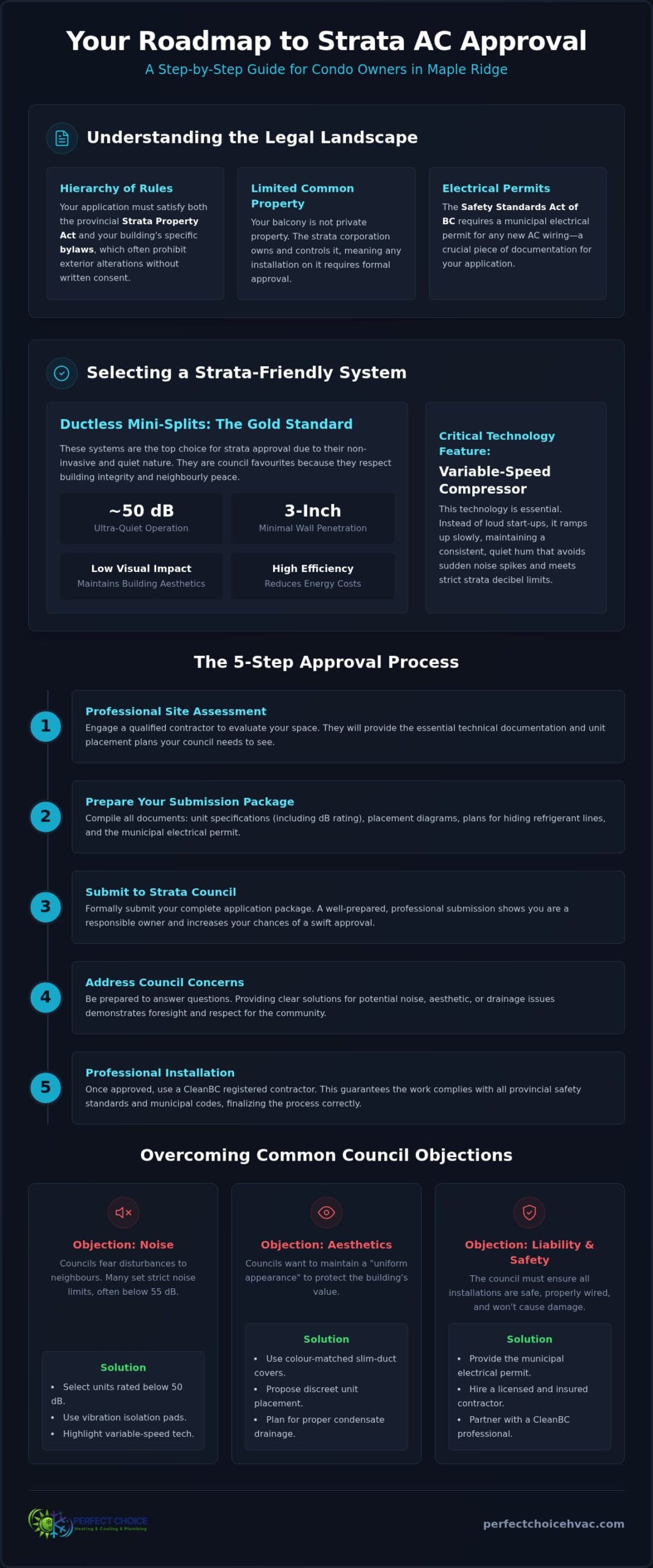
Securing strata approval for air conditioning Maple Ridge starts with knowing who actually makes the rules. In British Columbia, the Strata Property Act provides the legal framework, but your specific building’s bylaws are the day-to-day laws you must follow. Understanding Strata Bylaws is the first step because most buildings operate under “Standard Bylaws.” These rules strictly prohibit any alterations to the exterior of the building without prior written consent from the council. Since an AC installation involves mounting hardware or drilling through an exterior wall, you cannot skip the formal application process.
It’s a common mistake to assume your balcony is your private property. In most Maple Ridge condos, balconies are classified as “limited common property.” This means that while you have exclusive use of the space, the strata corporation still owns and controls the structure. You’ll also need to account for the Safety Standards Act of British Columbia. This requires a municipal electrical permit for any new wiring or circuitry, a detail many homeowners overlook until their application is flagged by the council. Any unit you place on the balcony must meet their standards for safety, weight, and appearance.
Maple Ridge Municipal Noise Limits
Noise is the primary reason councils reject applications. The City of Maple Ridge regulates the sound levels of mechanical equipment in residential zones to ensure neighbours aren’t disturbed. Most modern heat pumps and AC units provide a decibel (dB) rating in their technical specs. However, don’t rely solely on city limits. Many local strata councils set their own noise thresholds that are significantly stricter than municipal bylaws. They often require units to operate at 55 dB or lower during the night. Choosing a system with a variable-speed compressor is often the only way to meet these tight requirements while maintaining efficiency.
Aesthetic Guidelines and Building Uniformity
Councils prioritize a “uniform appearance” to protect the building’s resale value. They don’t want a patchwork of different coloured pipes or haphazardly placed condensers. To win approval, you’ll need to show exactly where the unit will sit and how the refrigerant lines will be hidden. Proposing aesthetic safeguards upfront shows the council you’re a responsible owner. It transforms your request from a potential eyesore into a professional, well-planned upgrade. Consider these common requirements:
- Slim-duct covers: These must be colour-matched to the building’s exterior siding or brick.
- Strategic placement: Condensers should be placed in discreet corners of the balcony rather than in the centre of the railing.
- Drainage management: Ensure all condensate lines are routed properly to prevent water from dripping onto units below or staining the building face.
Choosing Strata-Friendly Cooling Systems for Your Condo
Picking the right equipment is the fastest way to streamline your strata approval for air conditioning Maple Ridge. While portable units are loud and window units are often banned, modern ductless systems offer a professional solution that councils find hard to reject. Success depends on selecting hardware that respects building integrity and neighbourly peace. You must follow the Maple Ridge Regulations set by the province to ensure your choice aligns with legal standards for common property alterations.
The most critical technical feature is the variable-speed compressor. Unlike older models that kick on with a loud bang, these units ramp up slowly and maintain a consistent, quiet hum. This technology is essential for meeting the strict decibel limits set by most local councils. It prevents the vibration and sudden noise spikes that typically trigger neighbour complaints.
Ductless Mini-Splits: Quiet and Non-Invasive
Ductless mini-split systems are the gold standard for condo living. They require only a small three-inch hole through the exterior wall for refrigerant lines, which is far less invasive than central air ductwork. These units are incredibly quiet, often operating under 50 dB. This makes them ideal for tight spaces where balconies are close together. If you are looking for ductless mini-split installation Coquitlam or Maple Ridge residents can trust, choosing a model with high-efficiency ratings is key.
Heat Pumps as a Year-Round Solution
Councils increasingly prefer heat pumps over traditional AC units. Heat pumps align with BC’s CleanBC goals and strata Environmental, Social, and Governance (ESG) targets by providing energy-efficient heating and cooling in one compact unit. This dual-purpose functionality reduces the need for multiple appliances on your balcony, helping you secure strata approval for air conditioning Maple Ridge more easily. To see how these systems fit your budget, check our CleanBC heat pump rebate Coquitlam guide for the latest 2026 savings information.
Before you buy, evaluate your electrical capacity. Many older Maple Ridge buildings have 60-amp or 100-amp panels. A professional assessment will determine if your panel can handle the new load without a costly upgrade. If you aren’t sure where to start, we can provide a free in-home estimate to check your electrical readiness and help you choose the right system for your space.
The Step-by-Step Strata Approval Process in Maple Ridge
Obtaining strata approval for air conditioning Maple Ridge requires a methodical approach. It’s a structured legal path designed to ensure that any changes to common property are safe, quiet, and properly insured. The Step-by-Step Strata Approval Process typically begins with due diligence. You must verify your building’s specific HVAC policies before committing to a system. Don’t guess. Following a clear sequence of events prevents costly delays or the forced removal of unapproved equipment.
Once you’ve confirmed that installations are permitted, follow these five essential steps to secure your strata approval for air conditioning Maple Ridge:
- Step 1: Request a copy of your current bylaws. Bylaws can be amended annually, so ensure you have the most recent version from your property manager.
- Step 2: Book a professional site assessment. This determines where the condenser can sit and how the refrigerant lines will run without compromising the building’s structure.
- Step 3: Prepare your formal Request for Alteration (RFA). This is your technical pitch to the council.
- Step 4: Review and sign the Alteration Agreement. This document outlines your financial and legal responsibilities for the system.
- Step 5: Wait for written approval. Never start work based on a verbal “yes” from a single council member.
The Request for Alteration (RFA) Package
Your RFA package is the most important document in this process. To reduce council anxiety, include detailed spec sheets that highlight decibel ratings and energy efficiency. You must also provide proof of your contractor’s WCB coverage and liability insurance. A professional site plan is crucial. It shows exactly how the line-set will be hidden and where the unit will be mounted. When a council sees professional drawings that respect the building envelope, they’re much more likely to grant a quick approval.
The Alteration Agreement and Indemnity
The Alteration Agreement, often called an Assumption of Liability, is a binding contract. It states that you are responsible for the installation, maintenance, and any potential damage the unit might cause to common property. This agreement stays with the unit. If you sell your Maple Ridge condo, the new owner typically assumes these responsibilities. Most agreements also include a “noise complaint” clause. This gives the strata the right to demand repairs or removal if the unit becomes excessively loud. Choosing a high-quality, quiet system from the start is the best way to protect your investment under these terms.
Overcoming Common Strata Rejections and Concerns
Receiving a rejection letter from your council doesn’t have to be the end of the road. Most “no” votes are based on valid fears about noise, aesthetics, or building damage. To secure strata approval for air conditioning Maple Ridge, you need to address these concerns with technical evidence rather than just emotion. By offering a counter-proposal that includes specific mitigation hardware, you can often turn a skeptical council around. We’ve helped many residents navigate these hurdles by providing the exact engineering solutions councils require.
A common hurdle is the building’s electrical capacity. If a council claims the grid can’t handle the load, we suggest inverter-driven, energy-efficient models that draw significantly less power than traditional units. In some cases, we can even propose load-sharing devices that prioritize essential appliances. For aesthetic objections, we use slim-duct covers that match the building’s exterior colour and plan routes that keep the equipment out of direct sightlines. These small adjustments show the council that you’re committed to maintaining the building’s value.
Mitigating Noise and Vibration
Noise is the most frequent reason for a denied application. Even if a unit meets city bylaws, the vibration through a balcony floor can disturb neighbours. We solve this by using rubber “risers” or isolation pads. These simple tools prevent kinetic energy from travelling through the building structure. For the compressor itself, sound-dampening blankets can reduce operating noise by several decibels. When you submit your application, provide real-world comparisons. Comparing a heat pump’s quiet hum to a standard dishwasher often helps council members visualize the impact more clearly.
Addressing Building Envelope Integrity
Councils fear water ingress above all else. Any hole drilled through an exterior wall is a potential leak point. To overcome this, we use professional-grade flashing and high-performance sealants specifically designed for BC’s wet climate. We go a step further by providing a warranty on the penetration itself. This removes the liability from the strata corporation and places it on us. Providing this level of professional sign-off is often the final piece of the puzzle for strata approval for air conditioning Maple Ridge.
If you’ve hit a wall with your council, don’t give up. We can help you draft a technical counter-proposal that addresses their specific worries. Contact us today for a free in-home estimate and let our strata specialists guide you through the process.
Why Professional Installation is Key to Strata Success
A strata council’s primary job is to protect the building and its residents. When they review your application, they aren’t just looking at the equipment. They’re looking at the credentials of the person behind the tools. Choosing a CleanBC registered contractor is often the deciding factor for strata approval for air conditioning Maple Ridge. It signals to the board that the work will meet provincial safety standards and that the installer is fully insured. Working with a professional team eliminates the liability concerns that lead to automatic rejections.
We bring 8+ years of hands-on HVAC experience to every project. We’ve worked with dozens of councils across the Lower Mainland and understand their specific hang-ups. Whether it’s a concern about electrical load or the visual impact on the building face, we’ve likely solved that exact problem before. Our goal is to make you look like a responsible, well-prepared owner in the eyes of your neighbours. We don’t just install units; we provide the professional validation your council needs to say yes.
Perfect Choice HVAC: Your Strata Partner
We specialize in bridging the gap between homeowners and strata boards. Most contractors leave the paperwork to you, but we take a proactive approach. We provide the exact technical spec sheets, decibel ratings, and insurance certificates your council requires for a successful strata approval for air conditioning Maple Ridge. Our technicians are specifically trained to respect common property. We ensure that every wall penetration is sealed to an engineering standard and that line-sets are hidden with colour-matched covers. If you’re also considering a system for a different property, our guide on heat pump installation Coquitlam offers deeper insights into regional requirements.
Post-Installation Support and Maintenance
The approval process doesn’t end once the unit is mounted. Many strata agreements include clauses that allow the council to demand the removal of a unit if it becomes a noise nuisance later. We offer annual maintenance packages to keep your system running at its quietest, ensuring you stay within bylaw limits for years to come. Our team also provides daily 7:00 AM–9:00 PM emergency support, giving both you and your neighbours peace of mind. Beyond the technical side, we assist with CleanBC and provincial rebate applications to maximize your return on investment. We’re here to ensure your home stays cool while your relationship with the strata remains professional and stress-free.
Secure Your Comfort for Summer 2026
Navigating complex strata rules doesn’t have to be a solo mission. By choosing quiet, energy-efficient equipment and preparing a professional technical package, you can overcome common hurdles like noise concerns and building envelope fears. A successful application depends on transparency and technical precision. You now have the roadmap to present the right data upfront, which is the best way to turn a potential rejection into a confident approval.
Securing strata approval for air conditioning Maple Ridge is much simpler when you have a specialist handling the technical paperwork and municipal permits. As a CleanBC Registered Contractor with 8+ years of hands-on HVAC experience across the Lower Mainland, our licensed and insured professionals understand exactly what councils look for. We provide the detailed spec sheets and certified installation required to protect your building’s integrity and your long-term peace of mind.
Take the first step toward a cooler, more comfortable home today. Get a Free Quote and Strata Consultation from Perfect Choice HVAC. Our team is ready to guide you through every step of the process with clarity and reliability. You deserve a stress-free summer in a home that stays perfectly cool.
Frequently Asked Questions
Do I really need strata approval for a portable air conditioner in Maple Ridge?
Most stratas don’t require formal approval for the unit itself because it isn’t a permanent alteration. However, you must check your bylaws regarding window venting kits. If the hose or plexiglass insert changes the building’s exterior appearance or prevents the window from closing securely, you could face a fine. Always ensure your unit doesn’t drip condensate onto balconies below, as this often triggers neighbour complaints.
How long does the strata approval process typically take for an AC unit?
The timeline typically ranges from two to six weeks. This depends entirely on your strata council’s meeting schedule. If you submit a complete package with technical specs and insurance, they may approve it via email between meetings. However, if your application is missing details like the electrical permit or noise ratings, the process can stretch to several months while you wait for the next formal hearing.
Can a strata council in BC legally ban all air conditioning units?
Strata corporations in BC cannot unreasonably prohibit cooling systems, especially given recent provincial public health guidelines. While they can’t issue a blanket ban, they can set strict, reasonable restrictions on noise, aesthetics, and placement. If a council refuses all requests without technical justification, owners can challenge the decision through the Civil Resolution Tribunal, citing the province’s push to remove barriers to cooling during extreme heat events.
What is an Alteration Agreement and why do I have to sign it?
This is a legal contract that shifts the responsibility for the AC system from the strata corporation to you. By signing it, you agree to pay for all installation, future maintenance, and any repairs to common property caused by the unit. It protects other owners from being financially liable for your private upgrade. It’s a standard requirement for strata approval for air conditioning Maple Ridge in almost every modern building.
Will installing AC affect my neighbour’s noise levels in a townhouse?
Yes, noise and vibration can travel through shared walls or floors in a townhouse. Even if the outdoor unit sits on a concrete pad, the vibration can resonate into the neighbouring unit. We recommend using rubber isolation pads and sound blankets to minimize this impact. Providing your neighbour with the unit’s decibel rating beforehand can also help manage expectations and prevent future disputes over operating noise levels.
What happens if I install an air conditioner without strata approval?
Installing a system without written consent is a major risk. The strata council can issue daily fines and eventually obtain a legal order to force the removal of the equipment at your expense. You would also be responsible for restoring the building envelope to its original condition. This often costs significantly more than the initial installation and can make it very difficult to sell your home in the future.
Are there specific heat pumps that are easier to get approved by stratas?
Ductless mini-split heat pumps with inverter technology are the easiest to get approved. These systems are significantly quieter than traditional central air conditioners and require much smaller wall penetrations. Councils prefer them because they align with provincial energy goals and minimize the risk of water ingress. High-efficiency models with low decibel ratings, typically under 55 dB, are generally viewed as the gold standard for condo applications.
Does the strata council have to give a reason if they reject my application?
Yes, under the Strata Property Act, a council must act reasonably when considering alteration requests. If they reject your application, they should provide a specific reason, such as noise concerns or electrical capacity issues. If they provide a reason, you have the opportunity to submit a counter-proposal with technical solutions. Adding sound-dampening blankets or a load-sharing device can often address their specific worries and lead to a successful approval.