Imagine waking up on a chilly morning in Burke Mountain only to realize the air coming from your vents is ice cold. When you’re dealing with a furnace not working Coquitlam winters can quickly turn a comfortable home into a fridge. It’s natural to feel a sense of dread about potential time-sensitive repair fees or the safety of your gas system. You want your home warm again, but the complex mechanical world of HVAC often feels overwhelming and confusing.
We believe home maintenance should be transparent and stress-free. Many furnace issues are actually common faults that you can identify safely before calling for professional help. This guide promises to help you understand why your system failed and provides a clear, step-by-step troubleshooting process to restore your comfort. We will walk you through essential checks to help you avoid unnecessary service call fees while keeping your family safe and warm.
Key Takeaways
- Identify whether your unit is completely silent or simply blowing cold air to narrow down the most likely mechanical faults.
- Learn the safe “Power Cycle” reset technique to resolve a furnace not working Coquitlam homeowners often face during sudden temperature drops.
- Understand the impact of Coquitlam’s high humidity on internal sensors and why the blower motor is critical to your system’s sequence of operation.
- Apply the “50% Rule” to determine if a repair is a smart investment or if it’s time to upgrade to a high-efficiency heating system.
- Recognize “red alert” safety hazards, such as the smell of rotten eggs or signs of a cracked heat exchanger, that require a licenced gas fitter immediately.
Common Reasons Your Furnace Stopped Working in Coquitlam
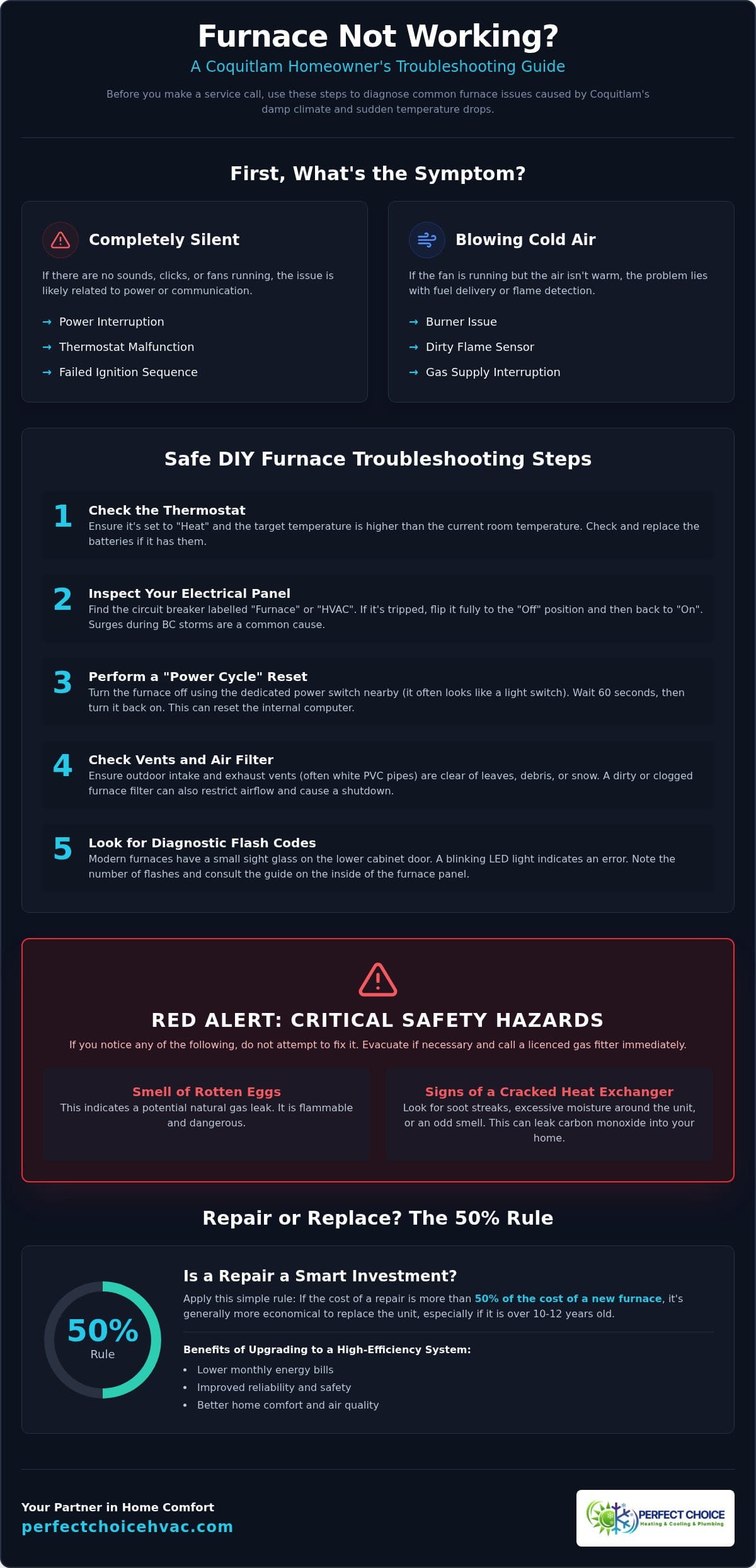
When you realize you have a furnace not working Coquitlam winters feel much harsher. You should first notice the specific symptoms. Is the unit completely silent, or is the blower running but pushing out cold air? A silent furnace usually points to a power interruption or a failed ignition sequence. If it’s blowing cold, the issue often lies with the burners, a dirty flame sensor, or a gas supply interruption. Understanding how furnaces function helps you categorize the fault into three main areas: electrical power, fuel delivery, or mechanical wear. Most homeowners can check the power and thermostat settings themselves before calling for a professional diagnostic.
Distinguishing between these three categories is the first step in any effective troubleshooting process. A power issue means the furnace isn’t getting the electricity it needs to start its internal computer or safety checks. A fuel issue involves the gas valve, the supply line from the street, or the ignition components. Finally, a mechanical failure covers moving parts like the inducer fan or the blower motor. Identifying which category your problem falls into can save you hours of frustration and help you provide better information if you eventually need to request a service call.
Impact of the Lower Mainland Climate on Heating Systems
Coquitlam’s geography creates a damp microclimate that affects your heating equipment. This persistent moisture can lead to premature corrosion on internal components over time. Older heat exchangers are particularly vulnerable to rust when exposed to high humidity over several seasons. We frequently find that external intake and exhaust vents become blocked by soggy debris, fallen leaves, or fast-growing local foliage. In the Tri-Cities, rapid temperature fluctuations also cause systems to cycle more frequently. This constant starting and stopping puts extra strain on the blower motor and can limit the overall lifespan of the unit if it isn’t maintained properly.
The Most Frequent Furnace Faults We See in the Tri-Cities
Many service calls in the Tri-Cities involve surprisingly simple issues that don’t require major part replacements. Thermostat malfunctions remain the number one cause of a cold home. It’s often as basic as dead batteries or a programmed schedule that was accidentally changed during a power flicker. During intense BC storms, electrical surges can trip the dedicated furnace circuit breaker in your electrical panel. If the power is active but the heat won’t kick in, you might be facing an ignition failure. In many older Coquitlam residences, the pilot light or the modern hot surface ignitor can fail due to age. A dirty flame sensor is another common culprit. It’s a small rod that detects the flame; if it’s covered in carbon soot, it will shut the system down for safety reasons almost immediately after it starts.
Understanding Your Heating System: How Furnaces Function
To fix a furnace not working Coquitlam residents first need to understand how the system thinks. A furnace operates through a strict “Sequence of Operation.” This is a safety-oriented checklist the unit performs every time it starts. First, the thermostat calls for heat. The inducer motor then clears the combustion chamber of any leftover gases. Next, a pressure switch confirms the air is moving safely. Only after these checks does the igniter glow, the gas valve open, and the flame sensor verify a successful fire. Finally, the blower motor kicks in to push that warmth through your vents. If any single step in this chain fails, the system locks out to protect your home.
In 2026, most Coquitlam homes utilize high-efficiency condensing furnaces. These units differ from older mid-efficiency models because they feature a second heat exchanger to capture extra heat from exhaust gases. If your furnace has PVC plastic venting rather than metal, it’s a high-efficiency model. These systems produce condensation during operation. This means a simple clogged drain line or a frozen condensate pump can stop your heat just as effectively as a major mechanical failure. Modern units also communicate through LED flash codes. You can usually find a small sight glass on the lower cabinet door. A blinking light there acts as a diagnostic tool, with the number of flashes corresponding to a specific error code listed on the inside of the furnace panel.
Critical Components: Igniters, Flame Sensors, and Blower Motors
The hot surface igniter is a common wear item that functions much like a light bulb filament. Over several seasons, the intense heat causes it to become brittle and eventually crack. If this part fails, the furnace will go through its startup sounds but never actually produce fire. The flame sensor is another small but vital piece. If it’s coated in carbon soot, it won’t “see” the flame and will shut the gas off within seconds for safety. The blower motor is the powerhouse that moves air. If your furnace is noisy or shuts down shortly after ignition, the motor or its starting capacitor might be failing. If you notice these symptoms, our team offers professional furnace repair and maintenance to get your system back in balance.
The Role of Airflow in System Safety
Airflow is the lifeblood of your heating system. When air is restricted by a dirty filter or closed registers, the internal temperature of the furnace spikes. This triggers the high-limit switch, a safety device that cuts power to the burners to prevent a fire. Repeatedly hitting this limit puts immense stress on the metal components. The heat exchanger is the heart of your furnace’s safety system, acting as a sealed barrier that keeps toxic combustion gases out of your breathing air. Restricted airflow is the primary cause of heat exchanger cracks, which can lead to carbon monoxide leaks and the need for a full system replacement.
Step-by-Step DIY Furnace Troubleshooting for Homeowners
Before you begin inspecting your heating system, safety must be your first priority. If you ever smell a distinct odour of rotten eggs, stop what you are doing immediately. This scent is added to natural gas to help you detect leaks. In this situation, do not touch any electrical switches or use your phone inside. Leave your home, leave the door open, and call your gas provider from a safe distance. If there is no smell of gas, you can proceed with a few basic checks to see why you have a furnace not working Coquitlam home comfort depends on.
If the system is simply unresponsive, try the “Power Cycle” method. This is the most effective way to reset the internal control board and clear minor software glitches. Locate the power switch on the side of your furnace, which often looks exactly like a standard light switch. Flip it to the “Off” position and wait for at least 30 seconds. While you wait, check your electrical panel for any tripped breakers. Flip the switch back to “On” and listen for the inducer motor to start. This simple reset often resolves temporary lockouts caused by minor sensor errors. If the system still fails to respond after these steps, you may need emergency heating repair in Coquitlam to address a deeper mechanical or electrical fault before temperatures drop further.
Once the power is back on, look through the small round sight glass on the lower furnace door. Most modern units use a blinking LED light to tell you exactly what is wrong. A steady light usually means everything is fine, while a specific pattern of flashes indicates a fault. Note the number of short and long blinks. You can usually find a legend on the inside of the furnace panel that translates these flashes into a specific part failure, such as a pressure switch or igniter issue.
Checking the Basics: Power, Thermostats, and Gas Valves
Start with the simplest culprit: your thermostat. Ensure it is set to “Heat” and the temperature is at least five degrees above the current room temperature. Check the display for a low battery icon. Many service calls for a furnace not working Coquitlam technicians attend are resolved by simply replacing two AA batteries. Next, verify that the gas valve is open. The handle should be parallel to the gas pipe. If it is perpendicular, the fuel supply is cut off. This can happen if someone was recently moving items near the furnace and accidentally bumped the lever.
Airflow Issues: The Role of Dirty Filters and Blocked Vents
Your furnace needs to breathe to stay safe. A clogged air filter is the leading cause of system overheating. Slide out your filter and hold it up to a light source. If you cannot see light through the fibres, it is time for a replacement. A restricted filter causes the heat exchanger to get too hot, forcing the high-limit switch to shut the system down. Ensure all your floor registers and return air grilles are open and not covered by heavy rugs or furniture.
Finally, step outside and check your vents. Coquitlam’s damp climate often causes wet leaves or debris to stick to the mesh screens of your intake and exhaust pipes. If you have a high-efficiency unit with white PVC pipes exiting the side of your house, ensure they are clear of any obstructions. Even a small bird’s nest or a collection of soggy leaves can block the airflow enough to trigger a safety lockout. The best way to prevent these recurring blockages and catch developing faults early is by scheduling a furnace tune up Coquitlam homeowners can rely on before each heating season begins.
When to Call a Pro vs. Considering a Furnace Replacement
Sometimes, basic DIY steps aren’t enough to solve a furnace not working Coquitlam residents often find. If your system is over 15 years old, you need to weigh the cost of a temporary fix against a permanent solution. We recommend using the “50% Rule” as your guide. If a repair quote exceeds half the value of a new unit, investing in modern equipment is usually the smarter financial choice. This is especially true when you consider the rising BC carbon tax, which is set to add approximately $300 to $550 per year to typical gas bills by 2026. A new high-efficiency system doesn’t just restore heat; it protects your budget from these predictable price hikes.
Modern systems also offer a massive advantage in indoor air quality. In the Lower Mainland, we deal with seasonal wood smoke and high humidity that can trap allergens inside. Newer HVAC units are designed to work with advanced filtration and HRV systems to keep your breathing air clean and dry. If your current furnace is struggling, you may be missing out on these health and comfort benefits while paying more for less efficient heating.
Safety First: Warning Signs That Require Immediate Licenced Repair
Unusual noises are your furnace’s way of asking for help. Screeching usually indicates a failing blower motor belt or a worn bearing. Persistent clicking often points to a faulty ignition sequence or a failing relay. Most concerning is a loud bang during startup, which suggests delayed ignition. This can cause physical stress to the heat exchanger over time. If your carbon monoxide detector triggers, you must act immediately. Open your windows, move everyone outside, and call a professional. Never attempt to repair gas valves or control boards yourself. These components require specialized tools and certification to handle safely. In situations like these, securing prompt emergency heating repair Coquitlam homeowners can count on is the safest course of action.
The Repair vs. Replace Dilemma: Efficiency and BC Rebates
In 2026, the transition to electric heating is accelerating across Coquitlam. While a gas furnace repair might restore warmth today, it doesn’t address the long-term savings of switching to a high-efficiency heat pump. You can significantly lower your upgrade costs by applying for a CleanBC heat pump rebate Coquitlam homeowners are eligible for. Perfect Choice HVAC is a CleanBC registered contractor HVAC, which means we can help you navigate the application process and ensure your installation meets all provincial standards. For a detailed breakdown of your options, check out our Ultimate Guide to Heat Pump Installation in Coquitlam.
Need an expert opinion on whether to fix your current unit or upgrade? Reach out to us for professional furnace repair and maintenance to get a clear, honest assessment of your system’s health.
Reliable Furnace Repair and Emergency Services in Coquitlam
When DIY efforts don’t resolve a furnace not working Coquitlam residents need a fast, dependable solution. We provide Daily Service Hours: 7:00 AM–9:00 PM throughout Coquitlam, Port Coquitlam, and Port Moody. Heating failures don’t follow a schedule, so we make sure our team is ready whenever the temperature drops. Every technician we send to your door is a licenced gas fitter. This ensures your system is handled with the highest safety standards and technical precision. We prioritize long-term relationships over one-time transactions. This commitment is reflected in our “no-surprises” billing policy. You’ll receive a clear explanation of the fault and the total cost before any repair work begins.
If you live in one of the many local townhouses or condos, you know that repairs often involve more than just a toolkit. We have extensive experience handling strata approvals and coordination. We understand the specific requirements of Tri-Cities strata councils. Our team provides the necessary documentation to keep your building manager satisfied while we work to restore your heat. This proactive approach simplifies complex decisions and alleviates the stress of home maintenance for local homeowners.
What to Expect During a Professional Diagnostic Visit
Our diagnostic process is methodical and highly efficient. We don’t just look for a quick fix; we identify the root cause of the failure to prevent future breakdowns. A typical visit includes a detailed inspection of the ignition system and all safety controls to ensure reliable operation. We also perform testing for carbon monoxide leaks and calibrate your gas pressure for maximum efficiency. To keep your system running at peak performance year after year, we recommend pairing any repair visit with a comprehensive furnace tune-up Coquitlam homeowners trust to catch small issues before they become costly emergencies. If you are located nearby, you can access our specialized furnace repair Port Coquitlam service for immediate assistance.
Why Local Expertise Matters for Your Coquitlam Home’s Comfort
Choosing a locally owned business means working with experts who truly understand the Tri-Cities environment. We are familiar with local building codes and the unique challenges posed by Coquitlam’s elevation changes and damp microclimates. Perfect Choice HVAC has served the community since 2023, building a reputation for integrity and professional validation. We aren’t a faceless corporation; we are your neighbours committed to keeping our community warm and safe. Book your furnace diagnostic with Perfect Choice HVAC today and experience the difference that transparent, local expertise makes.
Restore Your Home’s Comfort and Safety Today
Dealing with a furnace not working Coquitlam residents face during cold snaps doesn’t have to be a source of panic. By following the troubleshooting steps we’ve covered, you can often identify simple power or airflow issues yourself. You now understand the sequence of operation and the critical importance of maintaining a clean heat exchanger for your family’s safety. Whether it’s a quick filter change or a complex component replacement, having a clear plan of action is the first step toward a warm home.
If your system remains unresponsive, don’t risk your safety or comfort. Our team of Licenced Gas Fitters is ready to help with an A+ Local Reputation and Daily Service 7:00 AM–9:00 PM across the Tri-Cities. We take pride in providing transparent, honest advice to help you decide between a reliable repair or a high-efficiency upgrade. Need urgent help? Contact Coquitlam’s trusted furnace repair experts at Perfect Choice HVAC now.
You’ve done the right thing by educating yourself on your home’s heating system. Rest easy knowing that expert support is always available to get your home back to the perfect temperature.
Frequently Asked Questions
Why is my furnace blowing cold air in Coquitlam?
Cold air usually occurs when the blower motor runs but the burners haven’t ignited. This is often caused by a dirty flame sensor, a faulty igniter, or a tripped high-limit switch. Check your thermostat first to ensure it isn’t set to “On” instead of “Auto,” as the “On” setting keeps the fan blowing even when the furnace isn’t actively heating.
How much does a furnace repair typically cost in the Lower Mainland?
Repair costs depend entirely on the specific component that failed and the labour required for the fix. Minor issues like a capacitor replacement or sensor cleaning are generally more affordable than replacing a blower motor or control board. We recommend a professional diagnostic visit to get an accurate, transparent quote for your specific heating system.
Can I leave my furnace off if it’s making a loud banging noise?
You should turn your system off immediately if you hear loud banging or booming. These sounds often signal delayed ignition, where gas builds up before lighting, or a mechanical issue with the blower assembly. Operating a furnace in this state can damage the heat exchanger and create a significant safety hazard for your family.
How often should I change my furnace filter in BC’s climate?
We recommend checking your filter every month and replacing it at least every 90 days. In Coquitlam, our damp winters and seasonal wildfire smoke can cause filters to clog more quickly with fine particles. A clean filter is the best way to prevent a furnace not working Coquitlam homeowners need for reliable, efficient warmth.
Is it worth repairing a 15-year-old furnace or should I replace it?
It depends on the repair cost and the unit’s overall health. If a repair costs more than half the price of a new system, replacement is usually the better long-term investment. With a 15-year-old unit, you should also consider the energy savings and provincial rebates available for upgrading to a modern, high-efficiency heat pump.
Do you offer daily 7:00 AM–9:00 PM emergency furnace repair in Coquitlam?
Yes, we provide daily 7:00 AM–9:00 PM emergency furnace repair services across the Tri-Cities. We understand that heating failures often happen at the most inconvenient times, such as middle-of-the-night cold snaps. Our licenced technicians are always on standby to ensure you aren’t left in the cold when you have a furnace not working Coquitlam winters make unbearable.
What should I do if I smell gas near my furnace?
Leave your home immediately and do not touch any electrical switches, lighters, or phones inside. Once you are safely outside, call your gas utility provider’s emergency line or your local fire department. Natural gas has a “rotten egg” scent added for safety; never ignore this smell or attempt to find the leak yourself.
How do I know if my furnace igniter is bad?
You can often tell the igniter is bad if the furnace inducer motor starts but no flame appears. Look through the sight glass during the startup sequence; if you don’t see a bright orange glow before the system shuts down, the igniter has likely cracked. This is a common wear item that requires professional replacement by a technician.