
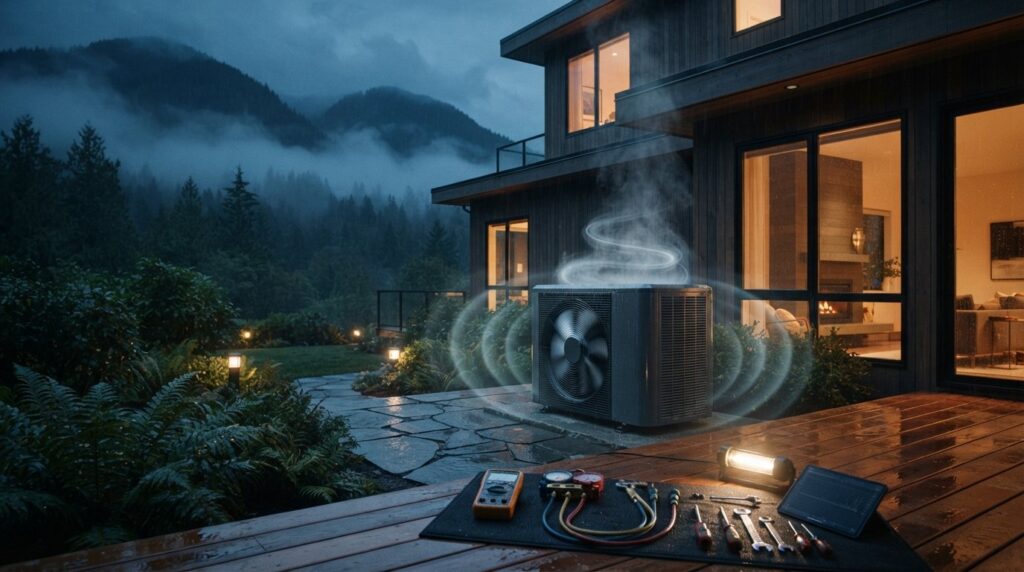
Imagine it’s 2:00 a.m. on a freezing Port Coquitlam night, and a sudden, metallic clanging from your backyard jolts you awake. You’re left wondering if your heating system is about to fail or if your neighbours are about to file a complaint under City Bylaw No. 4273. It’s incredibly stressful to hear your heat pump making loud noise in Port Coquitlam, especially when you rely on it for constant comfort during our damp, coastal winters. You deserve to know if that buzzing or screeching is just a minor vibration or a sign of a looming mechanical breakdown.
We understand the anxiety that comes with home maintenance, and we’re here to provide clarity. This guide will help you identify exactly what those specific sounds signify so you can take the right action before a small issue turns into a total system failure. We will walk you through local noise limits, explain why the normal defrost cycle often sounds so alarming, and provide a diagnostic FAQ to help you decide when it’s time to call a professional technician for a permanent repair.
Key Takeaways
- Learn to distinguish between common sounds like screeching or banging and understand what they mean for your system’s health.
- Understand why a heat pump making loud noise Port Coquitlam is often a symptom of mechanical wear or simple unit vibrations.
- Discover simple steps you can take at home, such as clearing debris and tightening panels, before calling for professional help.
- Learn the difference between a standard defrost cycle and a critical safety risk that requires immediate attention.
- Realize the long-term savings of professional diagnostics and the benefits of hiring a CleanBC registered HVAC contractor.
Identifying Common Heat Pump Noises in Port Coquitlam Homes
A heat pump making loud noise in Port Coquitlam is rarely a good sign. Our specific Tri-Cities climate, with its high humidity and frequent freeze-thaw cycles, puts unique stress on your HVAC system. Identifying the specific sound is the first step toward preventing a total breakdown. Different sounds point to different internal struggles, and recognizing them early can save you from an expensive emergency call-out.
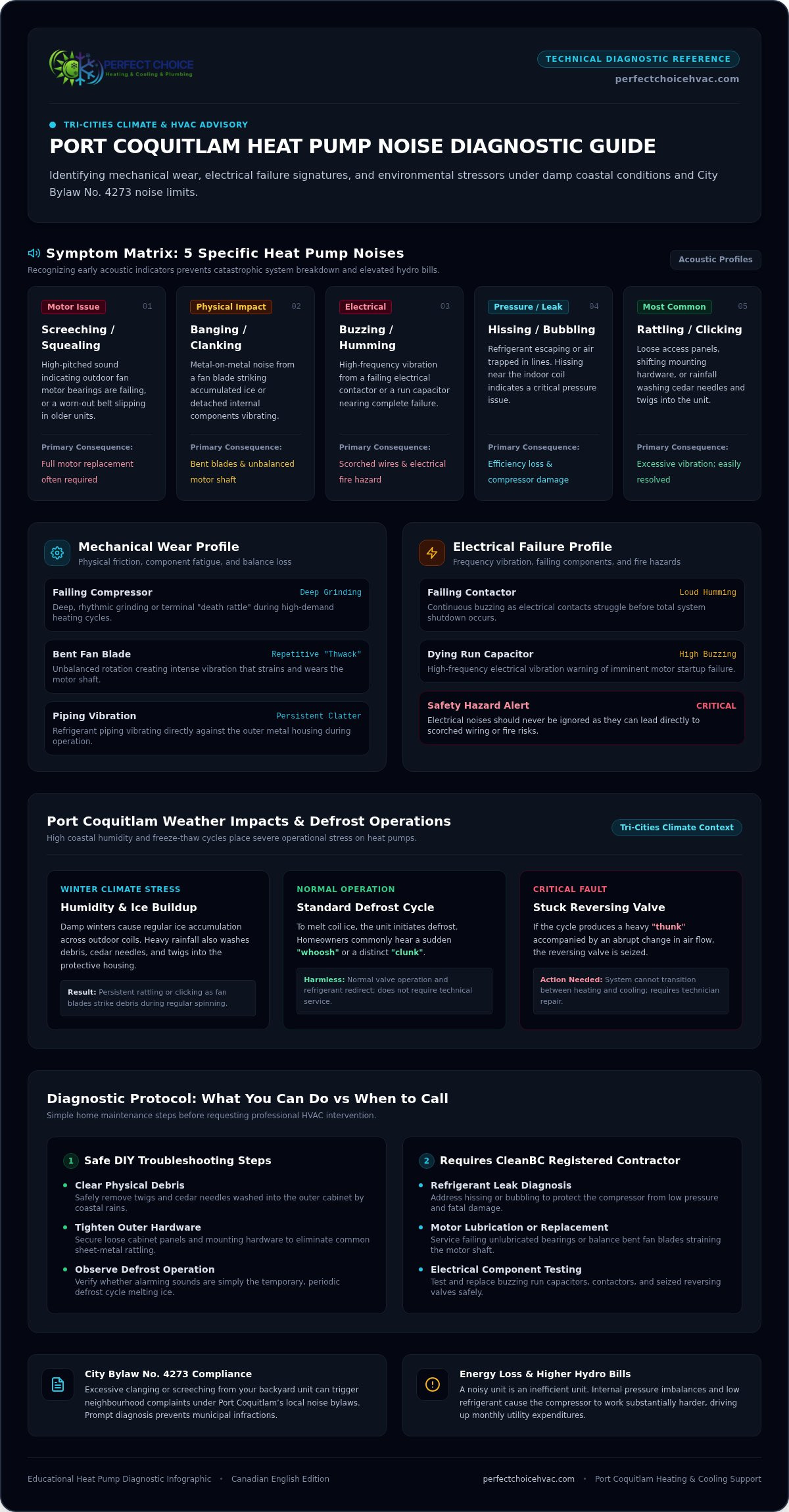
- Screeching or Squealing: This high-pitched sound usually indicates that the outdoor fan motor bearings are failing. In older units, it could also be a worn-out belt slipping during operation.
- Banging or Clanking: If you hear metal-on-metal sounds, something is likely loose. It could be a fan blade hitting a piece of ice or a detached component vibrating inside the housing.
- Buzzing or Humming: This is often an electrical issue. A failing contactor or a run capacitor that’s about to quit will often hum loudly before the system stops entirely.
- Hissing: A hissing sound typically signals a refrigerant leak. This is a serious issue that affects efficiency and can damage the compressor if the levels drop too low.
- Rattling: This is the most common noise. It is often caused by loose panels or mounting hardware that simply needs tightening to stop the vibration.
The Impact of Port Coquitlam Weather on System Noise
Port Coquitlam’s damp winters are notorious for causing ice buildup on outdoor coils. When your system enters a defrost cycle to melt this ice, you will often hear a sudden “whoosh” or a loud “clunk.” While these are normal, our heavy rainfall can also wash debris like cedar needles or small twigs into the unit. This debris often causes a persistent rattling or clicking as the fan spins, which can lead to larger mechanical issues if the debris isn’t cleared.
Mechanical vs. Electrical Sound Profiles
It is vital to distinguish between mechanical wear and electrical failure. Understanding the heat pump mechanical operation helps clarify these differences. A failing compressor often makes a deep, rhythmic grinding sound, whereas a loose fan blade sounds more like a repetitive “thwack.” Conversely, electrical buzzing is a high-frequency vibration. You should never ignore electrical noises, as they can lead to scorched wires or even fire hazards. If you hear a loud “thunk” followed by a change in air flow, your reversing valve may be stuck, preventing the unit from switching between heating and cooling.
Diagnostic Breakdown: Why Is My Heat Pump So Loud?
Understanding the root cause of a noisy unit is essential for preventing a total system failure. When you hear your heat pump making loud noise in Port Coquitlam, it’s usually the result of mechanical friction or internal pressure imbalances. Our local humidity can accelerate the wear on moving parts; this makes catching these diagnostic signs early even more critical. A noisy system is an inefficient one, and ignoring these sounds often leads to higher hydro bills and eventual equipment breakdown.
Fan and Motor Issues
The outdoor fan motor plays a vital role in heat exchange by pulling air across the coils. Over time, the bearings inside this motor can lose their lubrication, leading to high-pitched screeching sounds that can be heard from across the yard. If you notice a heavy vibration alongside the noise, you might have a bent fan blade. Even a slight bend creates an unbalanced rotation that puts immense strain on the motor shaft. While some motors allow for professional lubrication, a screeching motor often requires a full replacement to restore quiet operation and protect the surrounding components.
Refrigerant and Pressure Problems
Refrigerant is the lifeblood of your heating system. When levels drop due to a leak, the compressor must work significantly harder to move heat, which often results in a louder, deeper hum than usual. You might also hear a “bubbling” sound, which indicates air has entered the refrigerant lines. According to the Natural Resources Canada heat pump guide, maintaining a proper refrigerant charge is one of the most important factors for long-term efficiency and noise control. A hissing sound near the indoor coil is a major red flag; it requires immediate attention to prevent permanent compressor damage.
Beyond motors and refrigerant, internal components can simply vibrate loose over time. Refrigerant piping may begin to rattle against the unit’s metal casing during high-demand cycles, creating a persistent clatter. The most concerning sound, however, is the “death rattle” of a failing compressor. This deep, metallic grinding usually means internal valves or pistons are breaking down. Catching these issues during a routine check can prevent the need for a full system replacement. If you aren’t sure what your unit is telling you, having a trusted local expert perform a diagnostic can provide the peace of mind you need before the next cold snap hits.
Normal Operating Sounds vs. Emergency Repair Signals
Distinguishing between a healthy system and a failing one is the best way to avoid unnecessary anxiety. If you’re worried about your heat pump making loud noise in Port Coquitlam, the first step is knowing what sounds are actually part of the job. A modern inverter unit typically operates between 40 and 60 decibels, which is roughly the volume of a normal conversation. Anything significantly louder, especially if it disrupts your sleep or bothers the neighbours, is a clear signal that something is wrong.
What Normal Sounds Like
Every heat pump has a baseline of operational sounds that shouldn’t cause alarm. A healthy compressor produces a steady, low-frequency hum while it is running. You should also expect a gentle whoosh of air moving through your ductwork, which indicates proper airflow and balanced pressure. It is also common to hear faint clicking sounds when the cycle starts or ends as the electrical contactors engage. To keep these sounds from becoming problematic, following an ENERGY STAR HVAC maintenance checklist can help you verify that electrical connections and motor lubrications are within safe limits.
The “Call Now” Warning Signs
Some noises are immediate cries for help. If you hear metal-on-metal grinding, it usually means a motor is about to seize. This is a critical failure that can lead to a complete system lockout during a Tri-Cities cold snap. Another red flag is a persistent, loud buzzing accompanied by a faint burning smell. This often indicates scorched wiring or a failing capacitor, both of which pose a safety risk to your home’s electrical system. Finally, if your unit is rapid cycling, turning on and off every few minutes, and making loud thumping noises, the compressor is likely under extreme stress.
The cost of delay is the biggest threat to your budget. A small rattle or a loose panel is a simple, inexpensive fix. However, ignoring these early warning signs can lead to major component failure. In the Metro Vancouver area, a major compressor repair can range from C$1,200 to over C$2,500. Catching a failing fan motor or a loose electrical connection early prevents these four-figure repair bills and ensures your home stays warm when the temperature drops. If the noise is disruptive or just sounds wrong, trust your instincts and get a professional opinion before a minor nuisance becomes a total system replacement.
Troubleshooting Your Noisy Heat Pump Before Calling a Technician
Before you commit to a service call, there are several simple checks you can perform to silence a noisy unit. Often, a heat pump making loud noise in Port Coquitlam isn’t suffering from a fatal mechanical failure but is simply struggling with basic environmental factors. Taking twenty minutes to inspect your system can frequently resolve minor rattles and hums, saving you time and stress. However, it’s vital to know where the DIY path ends to protect both your safety and your equipment warranty.
Basic Exterior Maintenance
Start with the outdoor unit. In the Tri-Cities, wind and heavy rain often deposit cedar needles, twigs, and leaves into the fan cage. These obstructions cause a persistent clicking or tapping sound as the fan blades strike them. Ensure there is at least a two-foot clearance around the entire unit to allow for proper airflow. While you are there, check the exterior panels. Constant operation can loosen the screws over time, leading to a loud, metallic rattle. Simply tightening these screws with a screwdriver often eliminates the noise immediately. You can also gently rinse the coils with a garden hose to remove dirt, but avoid using high-pressure washers as they can bend the delicate fins.
Indoor Unit Checks
Noise isn’t always limited to the backyard. If you hear a high-pitched whistling or a deep hum coming from your indoor vents, the culprit is often a dirty air filter. A clogged filter restricts airflow, forcing the blower motor to work harder and creating a vacuum effect that generates noise. Check your register vents throughout the house as well; if too many are closed or blocked by furniture, the resulting static pressure can cause the ductwork to “oil-can” or pop. If you notice the indoor air handler cabinet vibrating against its mounting, you may need to add foam isolation strips to dampen the sound.
Finally, look at the base of your outdoor unit. Over time, the soil in Port Coquitlam can shift, causing the concrete pad to tilt. If the unit isn’t level, the internal oil in the compressor won’t circulate properly, leading to increased friction and noise. If you’ve cleared the debris, tightened the panels, and swapped the filters but the sound persists, it’s time to stop. Never attempt to open the electrical cabinet or tamper with refrigerant lines yourself, as this can void your manufacturer warranty and create a safety hazard. If these basic steps don’t quiet the system, schedule a professional diagnostic to identify the deeper mechanical cause.
Professional Heat Pump Repair and Maintenance in Port Coquitlam
Seeking professional help isn’t just about stopping a sound. It’s about protecting a major home investment. A heat pump making loud noise in Port Coquitlam often signals that internal tolerances are shifting due to years of exposure to coastal humidity. Professional diagnostics save you money in the long run by identifying the exact root cause. This prevents the “parts cannon” approach where multiple components are replaced unnecessarily. Annual tune-ups act as your primary defence, catching minor vibrations before they escalate into total motor seizures.
If your system is nearing the end of its 12 to 15 year lifespan, a repair might not be the best use of your budget. As a CleanBC registered contractor HVAC, we can help you determine if a rebate-eligible upgrade is more cost-effective. Sometimes, the noise is a sign that the compressor is simply worn out. In these cases, investing in a new heat pump installation Coquitlam provides better efficiency and long-term peace of mind.
The Perfect Choice HVAC Advantage
Perfect Choice Heating & Cooling was established in 2023 and is based in Coquitlam, serving the Tri-Cities. Our approach is built on transparency. We don’t just tell you a part is broken; we show you why it failed and how to prevent it from happening again. We also understand the unique challenges of local living, including helping residents with strata approvals for noisy outdoor units. For heat-pump repair, call 778-833-2893 daily from 7 AM–9 PM to confirm appointment availability and the next steps for your system.
Next Steps: Restoring Your Home Comfort
Booking a professional inspection is the fastest way to silence your unit and restore efficiency. If your home uses a hybrid setup, we provide expert furnace repair Port Coquitlam to ensure both sides of your system are working in harmony. We’ll assess your current equipment and provide a clear path forward. Whether it’s a simple bearing replacement or a full upgrade, we handle the technical details and help with rebate applications to maximize your savings. Don’t wait for a noisy unit to become a silent, broken one.
Restoring Peace and Efficiency to Your Home
Ignoring a heat pump making loud noise in Port Coquitlam is a risk that often leads to total system failure right when you need heat the most. As we’ve discussed, sounds like metallic grinding or electrical buzzing are early warnings that your unit’s internal components are under extreme stress. While simple maintenance like clearing debris or changing filters can resolve minor rattles, persistent mechanical noises require an expert diagnostic to protect your warranty. Taking action now prevents a small vibration from turning into a costly compressor replacement later this winter.
Perfect Choice HVAC is here to help you navigate these repairs with transparency and local expertise. Our team of licensed and insured local technicians is available for daily appointments from 7 AM–9 PM, subject to confirmed availability across the Tri-Cities. As a CleanBC registered contractor, we don’t just fix the noise; we ensure your system operates at peak efficiency to keep your hydro bills manageable. You deserve a home that is both quiet and consistently warm, without worrying about your neighbours’ sleep or your system’s reliability.
Schedule Your Heat Pump Repair in Port Coquitlam Today and let us take the stress out of your home maintenance. A quiet, reliable system is just one professional inspection away.
Frequently Asked Questions
Is it normal for my heat pump to make a loud noise when it starts up?
Yes, a brief increase in sound during startup is typical as the compressor and fan motor engage. You might hear a brief thump or a whoosh as the refrigerant begins to circulate and the system reaches its operating pressure. However, if you hear your heat pump making loud noise in Port Coquitlam that persists for several minutes after the cycle starts, it could indicate an issue with the motor or a failing start capacitor.
Why is my heat pump making a screeching sound in the middle of the night?
A screeching sound usually points to failing bearings in the outdoor fan motor or a worn out belt in older models. During the night, when temperatures drop in the Tri-Cities, metal components contract, which can exacerbate friction issues. If the noise is high-pitched and metallic, you should shut the system down immediately to prevent the motor from seizing. This proactive step helps avoid a much more expensive mechanical repair later.
Can a dirty air filter cause my heat pump to be louder than usual?
Absolutely, a clogged air filter forces the indoor blower motor to work significantly harder to pull air through the system. This restriction creates a high-velocity air sound, often described as a whistle or a deep hum, within your ductwork. Regularly changing your filters every 90 days is one of the simplest ways to reduce operational noise. It also ensures your system doesn’t suffer from premature mechanical wear due to restricted airflow.
What should I do if I hear a loud banging noise from my outdoor unit?
You should turn off the unit immediately and inspect the fan cage for any visible debris like branches or ice. In Port Coquitlam, heavy wind often blows cedar twigs into the housing, which creates a loud banging sound when struck by the fan blades. If the cage is clear but the banging persists, internal components like a mounting bracket or a fan blade may have loosened or fractured. Professional inspection is required.
Are some heat pump brands naturally louder than others in Port Coquitlam?
Yes, older single-stage units are generally louder than modern variable-speed inverter models. Brands that prioritize noise-dampening technology, such as insulated compressor blankets and swept-wing fan blades, operate much more quietly. When we perform a new installation, we often recommend these premium models for homes with narrow side yards. This ensures compliance with local municipal noise bylaws and helps maintain positive relations with your neighbours in high-density areas.
How much does it typically cost to fix a noisy heat pump in BC?
The cost varies significantly depending on whether the issue is a simple loose panel or a major mechanical failure. While we don’t provide specific pricing here, typical repairs in the Metro Vancouver area for components like capacitors or fan motors are generally manageable. Major repairs involving the compressor or refrigerant leaks are more substantial. We always provide transparent diagnostics to explain exactly what is needed before any repair work begins.
Will my heat pump explode if it is making a loud buzzing noise?
No, your heat pump will not explode, but a loud buzzing noise is a serious electrical warning sign. This sound often indicates a failing contactor, a struggling motor, or loose wiring that is arcing. While there is no risk of an explosion, these electrical issues can lead to scorched components or a localized fire hazard. It is best to have a licensed technician investigate any persistent buzzing immediately to ensure home safety.
How can I silence a vibrating heat pump unit on my patio?
Vibrations can often be silenced by installing neoprene isolation pads under the unit’s feet to dampen the transfer of sound to your patio or deck. You should also verify that the unit is perfectly level on its concrete pad, as an uneven base causes the internal components to rattle. If the vibration persists, a technician can check for loose internal refrigerant piping that may be striking the exterior casing during high-demand operation.