
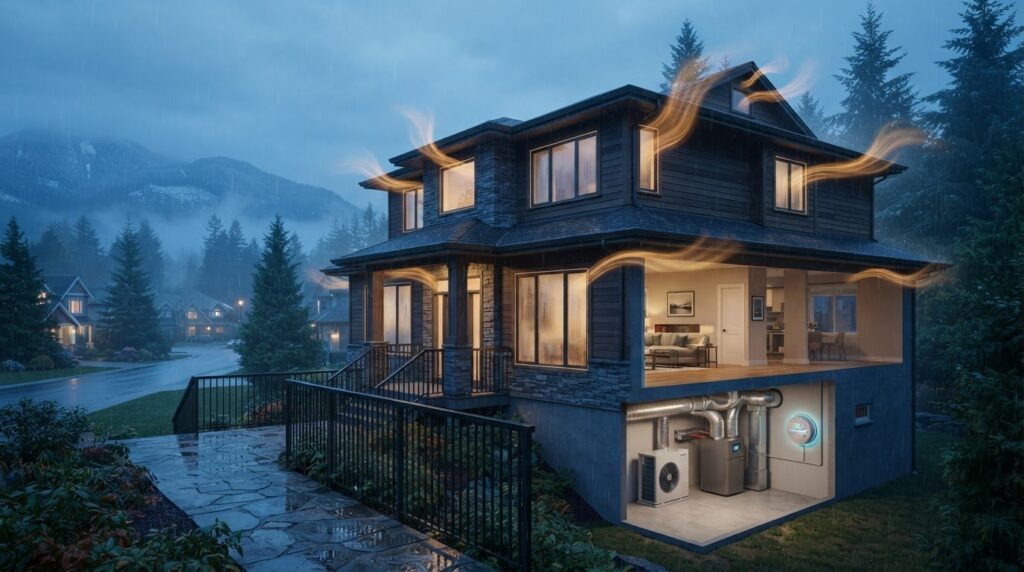
What if your winter bill increase isn’t caused by one faulty appliance? If you’re asking, “why is my energy bill so high in winter BC,” the answer may be a combination of colder weather, longer heating cycles and heat escaping from your home.
A higher bill can be unsettling, especially when you’re not sure whether your furnace or heat pump is struggling or a billing change is part of the increase. Heating demand often rises in winter, but the details matter. Electricity and natural gas may appear on separate bills, and a change in your billing period or rates can affect the total, too.
This guide explains common drivers of winter energy use in BC and what to check on your bill and around your home. You’ll learn which practical adjustments may help reduce heat loss and heating demand, and when a furnace or heat pump assessment could help identify an operating issue or maintenance need. Start with the basics, then decide whether professional diagnosis makes sense.
Key Takeaways
- Wondering why is my energy bill so high in winter BC? Longer heating cycles and heat escaping from your home may contribute, even if your system hasn’t failed.
- Compare energy use across similar billing periods, not just the amount due, and check whether electricity or natural gas charges changed.
- Look for clues such as uneven comfort, thermostat changes or restricted airflow before assuming your furnace or heat pump is the cause.
- Check bill details and accessible filters, then change one household setting at a time so you can track its effect.
- If higher use continues alongside comfort problems, a furnace or heat pump assessment can help identify operating issues and maintenance needs.
Why winter energy bills climb in BC homes
A higher winter bill doesn’t automatically mean your furnace or heat pump has failed. Often, your home simply needs more heat to stay comfortable. If you’re asking, “why is my energy bill so high in winter BC,” start with the weather, your home’s heat loss and the energy sources your household uses.
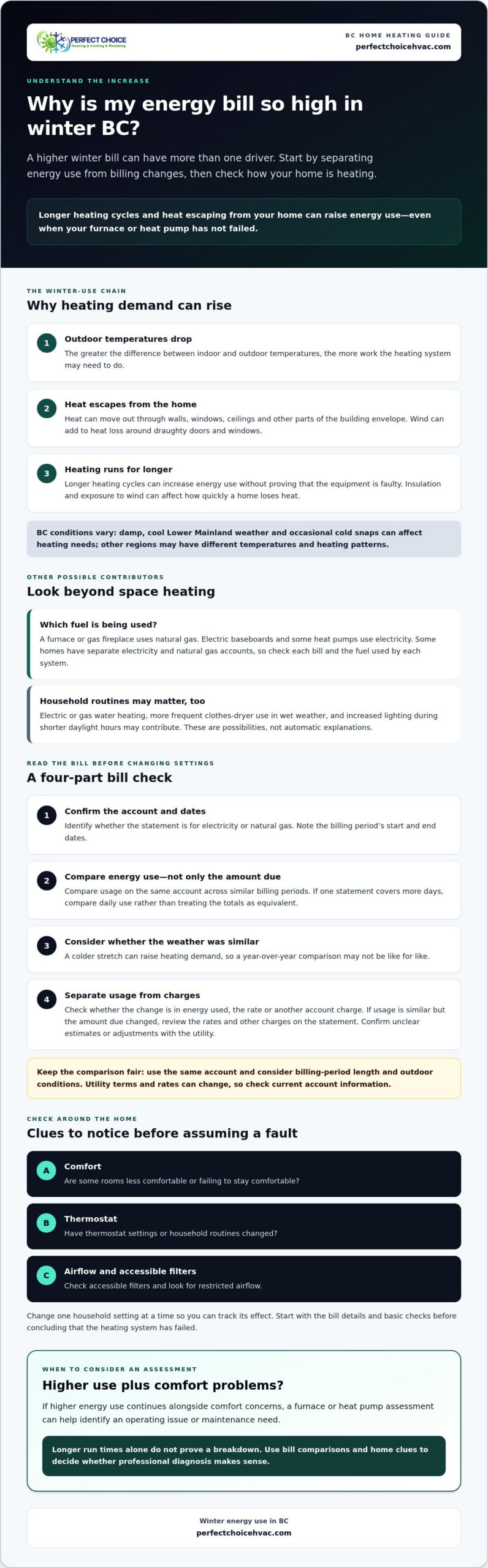
As outdoor temperatures drop, heat moves out through walls, windows, ceilings and other parts of the building envelope. The greater the difference between indoor and outdoor temperatures, the more work your heating system may need to do. Wind can increase heat loss, especially around draughty doors and windows. Longer heating cycles can raise energy use without signalling a breakdown.
How BC winter weather changes household energy use
Conditions vary across the province. In the Lower Mainland, including Coquitlam, Port Coquitlam, Port Moody and Maple Ridge, damp, cool weather can mean steady heating needs, while occasional cold snaps may prompt a system to run longer. Homes in other BC regions may face different temperatures, snowfall and heating patterns.
Your home’s exposure and insulation also matter. A home facing strong winds or with limited insulation may lose heat faster than a more sheltered, well-insulated home. That can affect comfort and heating demand even when neighbours experience the same weather. Longer run times reflect the home’s heat loss, but don’t prove the equipment is faulty.
Which household systems can add to a winter bill?
Space heating is often a major seasonal energy load, but the energy source depends on your home. A furnace or gas fireplace uses natural gas, while electric baseboards and some heat pumps use electricity. To understand why is my energy bill so high in winter BC, check whether you have separate electricity and natural gas accounts. Each bill tracks a different energy source, so a rise on one account may have a different cause from a rise on the other.
Electric water heating can also contribute, especially if household hot-water use changes. Clothes dryers may run more often when wet weather makes outdoor drying difficult, and shorter daylight hours can mean more lighting use. These are possible contributors, not automatic explanations. For a simple overview of how electric heating works, see Wikipedia. Your home’s heating fuel, equipment and daily routines determine which loads are relevant.
How to read a high winter energy bill in BC
If you’re asking, “why is my energy bill so high in winter BC,” check the statement before changing your heating settings or assuming equipment needs repair. First separate how much energy you used from how the account was billed.
Check usage, billing dates, and account details
Find the billing period’s start and end dates, the billed energy use and the amount due. Labels and layouts vary by utility, so check the explanation on your statement or contact the provider if a charge is unclear.
- Confirm the account and service. Note whether the statement is for electricity or natural gas, and check the billing dates.
- Compare energy use. Look at usage for a similar period on the same account, rather than comparing only the total amount due. A longer billing period can produce a higher total even if average daily use is similar.
- Consider the weather. Compare periods with similar outdoor conditions where possible. A colder stretch can raise heating demand, so a year-over-year comparison may not be like for like.
- Review charges separately. Check whether the change is in energy used, the rate or another account charge. If the statement shows an estimate or adjustment, confirm what it means with your utility.
For example, if the current statement covers more days than the previous one, compare daily usage rather than treating the two totals as equivalent. If billed usage is similar but the amount due has changed, look more closely at the rates and other charges shown on the account. Utility terms and rates can change, so check your current statement or the provider’s latest information instead of relying on an old bill.
Tell electricity and natural gas costs apart
Some BC households have separate electricity and natural gas accounts, while others use only one of those fuels. BC Hydro and FortisBC are examples of providers readers may see on their statements, but not every home is served by both. Check which fuel runs each system: a furnace may use natural gas, while electric baseboards or some heat pumps use electricity. Water heating can also be electric or gas.
This can help narrow down which account may reflect a change in heating or hot-water use. It won’t diagnose a system fault, but it gives you a clearer starting point. If your usage review also reveals a heating concern, such as rooms that aren’t staying comfortable, you can explore furnace and heat pump service as a separate next step. For questions about rates, billing dates or account charges, contact the utility listed on the bill.
Common reasons your winter energy use may be higher
A seasonal increase can come from ordinary heating demand, heat escaping from the home, thermostat habits or an equipment issue. These causes aren’t equally likely, and a high bill by itself can’t confirm that a furnace or heat pump has failed. If you’re wondering, “why is my energy bill so high in winter BC,” use the bill details alongside what you notice at home to narrow down the possibilities.
Heat loss, thermostat settings, and daily routines
Start with visible clues. Notice drafts around doors and windows, registers that are closed or blocked, and rooms that stay colder than others. Frequent thermostat adjustments can also change comfort and how the system operates. Make a note of what you change and how the home responds. Before adjusting system-specific settings, check the manufacturer’s instructions for your equipment.
| Possible cause | Clues to check | Sensible next step |
|---|---|---|
| Colder weather | Energy use rises during a colder stretch, while comfort remains fairly consistent. | Compare with a similar billing period and consider the weather before suspecting a fault. |
| Heat loss or airflow | Drafts, blocked or closed registers, or rooms with persistent comfort differences. | Note where the issue occurs. Check that accessible registers aren’t blocked by furniture. |
| Thermostat changes | Frequent adjustments or a change to the usual schedule. | Try a consistent setting, following the equipment manufacturer’s guidance, and observe comfort. |
| Equipment or maintenance concern | Persistent short cycling, unusual sounds or inadequate heating. A filter may also need attention, depending on the system. | Check the owner’s manual for safe filter guidance. Arrange a professional assessment if symptoms continue. |
When heating equipment may need attention
One unusual sound or a single cold room doesn’t prove there’s a fault. However, repeated short cycling, ongoing noise or heating that can’t maintain comfort are useful details to record and share with a qualified HVAC professional. A dirty filter or other maintenance need may affect performance, depending on the equipment. Inspect or replace accessible filters only as directed by the manufacturer. Leave internal repairs and electrical work to qualified professionals.
If you’re researching how heat pumps work or what to consider for a home in the area, read this guide to heat pump installation in Coquitlam. A heating assessment can help investigate operating and comfort concerns. It doesn’t mean replacement is automatically needed.
Practical ways to investigate and manage winter energy use
If you’re still asking, “why is my energy bill so high in winter BC,” work through a few low-risk checks before assuming your heating equipment needs repair. Keep notes as you go. A clear record can help you spot patterns and explain the issue if you contact your utility or an HVAC professional.
Low-risk checks homeowners can make first
- Confirm the bill details. Check the billing dates and usage, then compare them with a similar period on the same account. For billing, meter, account or rate questions, contact the utility named on your statement.
- Note comfort concerns. Record which rooms feel too cold, when the issue occurs and whether it persists. Check for noticeable drafts and blocked registers, but don’t open equipment panels to investigate.
- Review thermostat settings. Check the schedule and intended temperature settings. Make sure settings haven’t changed unexpectedly, and consult the equipment manual before adjusting system-specific controls.
- Inspect accessible filters. Follow the manufacturer’s instructions to check or replace filters designed for homeowner access. Filter type and maintenance requirements vary by system.
- Track changes over time. Note indoor comfort, thermostat settings, equipment behaviour and bill usage. Change one factor at a time so you can tell whether it affects comfort or consumption.
Small, steady adjustments are easier to assess than several changes made at once. For example, if you change a thermostat schedule and replace a filter on the same day, it may be difficult to tell which change affected system operation. Follow the manual and safety guidance for your equipment. Leave internal repairs and electrical work to qualified professionals.
When to contact the utility or an HVAC professional
Contact your utility if the concern is about a meter reading, account detail, billing period, charge or rate. An HVAC assessment may be appropriate if uneven heating, inadequate comfort, persistent short cycling or unusual equipment behaviour continues after basic checks. Share your notes and bill comparison. This helps keep billing questions separate from equipment diagnosis.
If you’ve noticed symptoms that may point to a furnace fault, learn more about furnace repair in Port Coquitlam. For persistent furnace or heat pump concerns, request a heating-system assessment to help identify whether the issue involves operation, maintenance or comfort.
When a winter bill points to a heating-system assessment
A high bill is a useful reason to investigate, but one statement alone can’t show that your furnace or heat pump has failed. First compare usage and billing details, then consider what’s happening at home. An assessment may help if heating concerns persist, such as rooms that remain uncomfortable, unusual equipment behaviour or a system that seems to struggle to keep up.
A qualified HVAC professional can review how the equipment is operating, discuss maintenance needs and consider the comfort issues you’ve noticed. This can help clarify whether there’s a system concern to address. It doesn’t mean replacement is automatically necessary. Billing or meter disputes belong with your utility, and general electrical work is separate from HVAC service.
What information to prepare before a heating assessment
A few clear observations can make the conversation more useful. Gather recent bills and note any changes to billing dates or household routines that might affect energy use. Record which rooms feel uncomfortable, the thermostat settings and schedule, and any unusual sounds or operating patterns you’ve noticed.
If you know the equipment type and fuel source, include that information. For example, note whether the home uses a furnace or heat pump and whether you know what fuel it runs on. Don’t guess at technical specifications. The equipment label or owner’s manual may provide details, but you don’t need to open panels or inspect internal components. Your observations are a practical starting point.
How local HVAC support can help
Perfect Choice HVAC serves homes and businesses in Coquitlam, Port Coquitlam, Port Moody, Maple Ridge and the surrounding Lower Mainland. Relevant services include furnace repair and maintenance, as well as heat pump repair, maintenance and installation. Licensed, insured and certified technicians can assess reported heating concerns, but an assessment can’t promise a specific diagnosis or bill outcome in advance.
If you’re still asking, “why is my energy bill so high in winter BC,” direct utility questions to the provider on your bill and seek HVAC support when equipment or comfort concerns continue. That gives each issue to the right professional without treating one higher bill as a reason to replace a system.
If your heating concerns persist, contact Perfect Choice HVAC to discuss an in-home assessment.
Take the next step toward a more comfortable winter
If you’re still wondering why is my energy bill so high in winter BC, remember that higher heating demand, heat loss and billing changes can all play a part. Compare energy use over similar billing periods, check which utility account has changed, and note any ongoing comfort problems or unusual equipment behaviour. One high bill alone isn’t proof that your furnace or heat pump has failed, and it isn’t a reason to replace it without an assessment.
For billing, meter or rate questions, contact your utility. If heating concerns persist, Perfect Choice HVAC provides furnace and heat pump service across the Lower Mainland. Its licensed, insured and certified technicians can assess your concerns, and free in-home estimates are available.
Contact Perfect Choice HVAC for help with persistent heating concerns. With clear bill details and a few observations about your home, you’ll be better prepared to choose a sensible next step.
Frequently Asked Questions
Why is my energy bill so high in winter in BC?
Winter bills often rise because colder weather increases heating demand, and heat loss can make a system run longer. If you’re asking “why is my energy bill so high in winter BC,” check whether energy use increased or whether billing dates, rates or other charges changed. Also identify whether the increase is on your electricity or natural gas account. A higher bill alone doesn’t confirm a heating-system fault.
Is it normal for an energy bill to increase in winter in BC?
Yes, a seasonal increase can be normal because homes generally need more heat in colder weather. The size of the change depends on factors such as outdoor conditions, insulation, thermostat settings, and the heating equipment and fuel your home uses. Compare energy use with a similar billing period, and consider differences in weather and billing dates. If the increase continues alongside heating or comfort problems, investigate further.
Can a heat pump make my winter electricity bill higher?
Yes. A heat pump uses electricity to heat your home, so increased winter heating demand may show up as higher electricity use. The amount depends on the system, weather, home and how it’s operated. If your system has electric backup heating, its use may also affect consumption. Check your bill against a similar period, review the equipment guidance, and ask an HVAC professional about persistent comfort or operating concerns.
How can I tell whether my high bill is from electricity or natural gas?
Check the utility name, account type and billed usage shown on each statement. Some homes receive separate electricity and natural gas bills, while others use only one of these fuels. Identify which energy source powers your furnace, heat pump and water heater, if known. BC Hydro and FortisBC may appear on bills, but not every household uses both. Contact the listed utility about account, meter, rate or billing questions.
What should I check first when my winter energy bill jumps?
Start with the bill: check its start and end dates, billed usage and account charges. Compare consumption with a similar period on the same account rather than comparing only the total due. Next, confirm your thermostat schedule and note any rooms that remain uncomfortable or unusual equipment behaviour. Check accessible filters only as directed by the system manual. Change one factor at a time so you can track what changes.
Can a dirty furnace filter cause a higher winter energy bill?
It can affect airflow and system performance, depending on the furnace and filter. Check only filters intended for homeowner access, and follow the manufacturer’s instructions for inspection or replacement. Don’t open equipment panels or attempt internal repairs. If the filter appears clear but the furnace continues to run unusually, makes unfamiliar sounds or doesn’t heat the home adequately, record what you notice and arrange an HVAC assessment.
When should I call an HVAC professional about a high winter bill?
Consider an HVAC assessment if higher use continues alongside inadequate heating, persistent short cycling or unusual system behaviour. One high bill alone isn’t enough to diagnose a fault or justify replacing equipment. Keep recent bills and notes about room comfort, thermostat settings and system symptoms. In Coquitlam, Port Coquitlam, Port Moody and Maple Ridge, Perfect Choice HVAC provides furnace and heat pump services, with licensed, insured and certified technicians and free in-home estimates.