
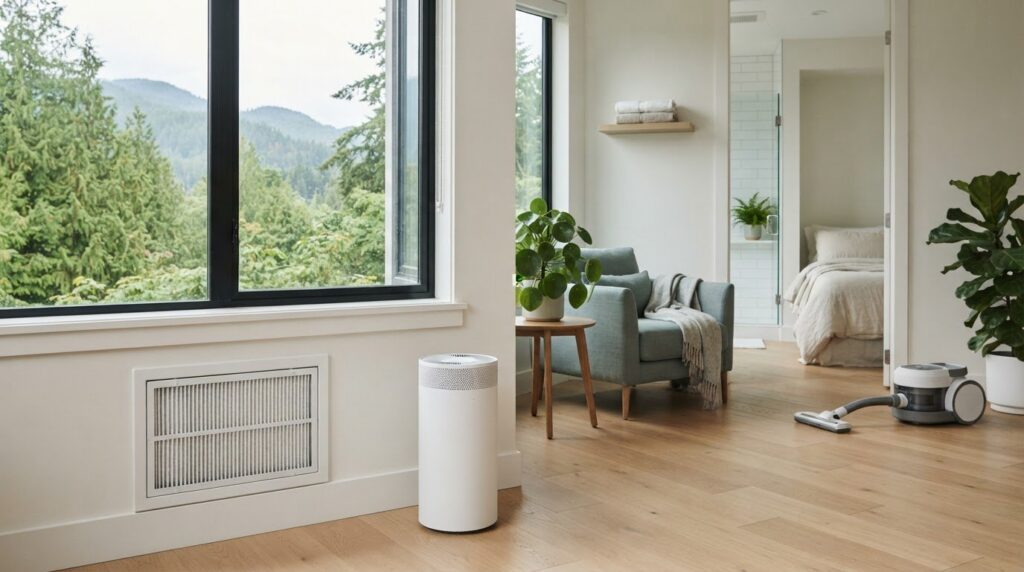
If symptoms seem worse at home, improving home air quality for allergies Coquitlam starts with looking for likely triggers, not replacing equipment right away. Dust, pollen brought indoors, pet dander, damp areas, and ventilation may all be part of the picture.
It’s understandable to feel unsure when advice about filters, air cleaners, and fresh air doesn’t agree. The right choice depends on what may be affecting your home and how its heating and ventilation systems work. A filter can capture some airborne particles, but it won’t remove every source of irritation or address a moisture problem.
This checklist helps you look for common indoor triggers, take practical source-control steps, and understand what filtration and ventilation can and can’t do. You’ll also learn when an HVAC assessment may help, and when ongoing allergy symptoms are best discussed with a healthcare professional. Start with the source, then decide what your home needs.
Key Takeaways
- Check likely sources in bedrooms, living areas, bathrooms, kitchens, and entryways before considering equipment changes.
- HVAC filters, portable air cleaners, and ventilation serve different purposes. Filter fit and system compatibility matter.
- Use a room-by-room checklist to reduce sources, clean thoughtfully, and reassess before making bigger changes to improve home air quality for allergies Coquitlam.
- Recurring moisture, persistent odours, or airflow concerns may make a professional HVAC review helpful.
- Duct cleaning or ventilation service may be worth discussing when home conditions point to a need. The right next step depends on what you observe.
Improving Home Air Quality for Allergies in Coquitlam: Start with This Checklist
You get home, start sneezing, and wonder what changed. There may be no single obvious cause. Dust, pet dander, mould, or pollen carried inside on clothing could contribute to indoor discomfort. Symptoms can also have other causes, so they can’t identify an allergy or its source on their own.
Start with what you can observe. Note when and where discomfort occurs, such as after time in a bedroom or on days when windows have been open. This checklist supports cleaner indoor conditions, but it doesn’t diagnose allergies. For improving home air quality for allergies Coquitlam households can follow a practical sequence: look for sources, reduce exposure, review filtration, then assess ventilation. These steps reflect the core indoor air quality methods outlined in Indoor air quality (IAQ).
First-pass checklist
- Look for dust, dampness, condensation, or visible water damage.
- Notice where and when indoor discomfort occurs.
- Check the filter and whether the HVAC system appears to be operating normally.
- Change one manageable habit at a time, then reassess.
What might make indoor allergy symptoms worse?
Common indoor triggers can include dust in carpets or bedding, pet dander on furniture, mould associated with damp materials, and pollen brought in on shoes or clothing. A symptom pattern may help you decide where to look, but it can’t confirm what’s causing the discomfort. Keep brief notes about rooms, activities, and timing before changing filters or adjusting home systems. Those notes give you a clearer starting point.
A quick first-pass home air quality check
Check places where dust gathers, including bedroom surfaces and soft furnishings. In bathrooms, kitchens, and around windows, look for damp areas or recurring condensation. Note any visible water damage. Then inspect the HVAC filter for accumulated dust or damage, and check that the system is running as expected. Follow the equipment instructions when checking or replacing a filter. Don’t assume a new or higher-rated filter is suitable without confirming compatibility.
Keep the first changes manageable. Focus on one dusty area or a single cleaning habit before moving on to filtration and ventilation. If symptoms are persistent, severe, or concerning, seek advice from a healthcare professional. An HVAC review can assess equipment and ventilation, but it doesn’t diagnose or treat allergies.
Find Common Allergy Triggers in Coquitlam Homes Before Changing Equipment
Before shopping for a new filter or air cleaner, walk through your home and look for places that collect dust, hold moisture, or let outdoor particles in. Visible clues can help you decide what to address, but they don’t confirm what’s causing anyone’s symptoms. The U.S. Environmental Protection Agency describes common biological contaminants, including dust mites, pet dander, and mould, that may be present indoors.
Check bedrooms, soft furnishings, and pet areas
Start where people spend time resting. Check bedding, upholstered furniture, rugs, and the areas where pets sleep for dust and accumulated hair or dander. Wash bedding and pet covers according to their care labels, and clean rugs and upholstery using methods suited to each material. If it works for your household, keeping pets off beds may help limit what collects on bedding.
In living areas, check curtains, cushions, and rugs, along with less obvious dust-catching spots such as shelves and the space beneath furniture. Focus on one area at a time so the routine stays manageable and you can see which changes are practical.
Look for moisture and outdoor allergens entering the home
Inspect bathrooms, basements, and window areas for recurring dampness, condensation, water staining, or visible mould. A stain or musty smell is a clue to investigate, not proof of a specific health cause. Address water intrusion promptly. If moisture keeps returning or the source isn’t clear, seek qualified help to assess the underlying issue rather than relying on cleaning alone.
At entry points, consider what comes in on shoes, coats, bags, and pets. A place to leave outdoor footwear and regular laundering of clothing can help limit pollen tracked inside. Opening windows can also bring outdoor pollen indoors, depending on conditions. UBC News describes tree pollen season in B.C. as running from February to June, and grass pollen season from May to August. These are seasonal patterns, not a forecast for today. Check current local pollen information before making decisions based on outdoor exposure.
- Bedroom: Check bedding, rugs, and pet resting places.
- Living areas: Inspect upholstered furniture, curtains, and dust-collecting surfaces.
- Bathrooms and basement: Look for persistent dampness, condensation, or water damage.
- Entryways and windows: Review how pollen may come in on belongings or through open windows.
Use what you find to guide the next step in improving home air quality for allergies Coquitlam households. If recurring moisture appears near HVAC equipment or ventilation, a qualified HVAC professional can assess relevant system concerns. Perfect Choice HVAC serves Coquitlam and offers indoor air quality and ventilation services. The appropriate service depends on observed conditions and your system’s needs.
Filters, Portable Air Cleaners, and Ventilation: What Helps with Allergies?
These options do different jobs. HVAC filters capture some airborne particles as air moves through the heating or cooling system. Portable air cleaners filter air in a particular room. Ventilation brings outdoor air in and moves indoor air out, exchanging air rather than filtering every particle already in the home. To improve home air quality for allergies Coquitlam homeowners can match the tool to the concern they’ve observed.
| Option | What it can do | What to check |
|---|---|---|
| HVAC filter | Captures some airborne particles passing through the system. | Filter rating, fit, condition, and system compatibility. |
| Portable air cleaner | Filters air in the room where it’s placed. | Choose a unit sized for the room and follow its manufacturer’s guidance. |
| Ventilation system | Exchanges indoor and outdoor air. | System operation, maintenance, and whether it suits the home’s needs. |
No single device removes every trigger or guarantees allergy relief. Filtration won’t remove settled dust or address damp materials, and ventilation isn’t the same as particle filtration. Outdoor air can also carry pollen, so consider conditions before increasing air exchange.
How to choose an HVAC filter without restricting system airflow
MERV is a rating that indicates how effectively a filter captures particles of different sizes. A higher rating isn’t automatically right for every furnace or air handler. A filter that doesn’t suit the equipment may affect airflow. Check the system manufacturer’s instructions and ask a qualified technician to confirm compatibility if you’re unsure. Make sure the filter fits correctly, then check its condition and replace it according to the schedule specified for the equipment and filter.
When a portable air cleaner or ventilation review may help
A portable cleaner may be worth considering for a room where you spend a lot of time. Select one intended for that room size, and follow the manufacturer’s placement, operation, and filter-care instructions. HRV and ERV systems are ventilation options that exchange indoor and outdoor air; they aren’t allergy cures. If you’re weighing ventilation changes, review your system and home needs first. For more background, see this Coquitlam indoor air quality homeowner’s guide.
Base the decision on what you observed at home. Confirm filter compatibility before upgrading, and consider ventilation advice if airflow or system operation is a concern. Perfect Choice HVAC offers HRV and ERV installation and indoor air quality services in Coquitlam. The appropriate service depends on the home and its equipment.
A Room-by-Room Allergy Checklist for Coquitlam Homeowners
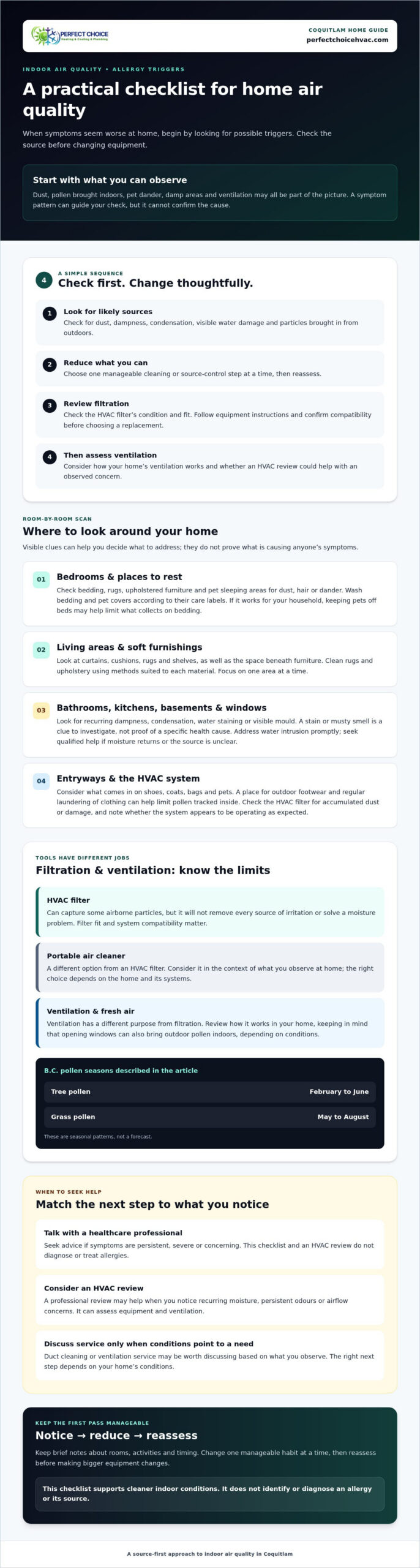
Make changes in a steady order: reduce likely sources, clean surfaces thoughtfully, review your filters, then reassess. Source control, filtration, and ventilation address different parts of indoor air quality. None is a stand-alone solution for every trigger, and household steps don’t replace healthcare or professional advice. For improving home air quality for allergies Coquitlam residents can start with manageable routines and a simple record of changes.
Daily and weekly habits that reduce indoor allergen buildup
Choose cleaning methods that suit each surface. Damp-dust hard surfaces and clean floors regularly without stirring up settled dust. Launder bedding and pet covers according to their care labels, and include pet resting areas in your household cleaning routine. Keep outdoor shoes near the entrance and clean the entry area so tracked-in particles don’t spread through the home.
- Bedroom: Launder bedding on a consistent schedule and clean dust-catching surfaces.
- Living areas: Clean floors and upholstery with methods suited to the materials.
- Pet areas: Wash bedding or covers as directed and keep them clean.
- Entry: Leave outdoor shoes by the door and clean the floor regularly.
- HVAC: Review the filter’s fit and condition, following the equipment and filter instructions.
Change one manageable habit at a time. That makes the routine easier to maintain and helps you notice whether a particular change seems useful.
Seasonal checks for pollen, dampness, and smoke
Outdoor conditions change. Before adjusting window habits, check current local pollen and air-quality information rather than relying on a seasonal assumption. During a smoke advisory, consult current public-health guidance for steps to protect indoor air. Also revisit ventilation and moisture conditions as the weather and household routines shift. Check whether condensation or dampness is recurring, and whether ventilation appears to be operating as expected.
Keep a simple home air log
- Room and date: Where did you make a change?
- Action: What cleaning, filter check, or ventilation adjustment did you make?
- Conditions: Were windows open, or was there a pollen or smoke advisory?
- Observation: Did comfort seem different? Record what you noticed without treating it as a diagnosis.
If you’ve completed basic checks but still have questions about filtration or ventilation, you can ask Perfect Choice HVAC about indoor air quality services in Coquitlam. An HVAC review can consider the equipment and its needs, while persistent or concerning symptoms should be discussed with a healthcare professional.
When to Ask a Coquitlam HVAC Professional About Allergy-Related Air Quality
Some concerns call for a closer look at your home’s equipment. Ask an HVAC professional about persistent odours, airflow that seems weak or uneven, visible system issues, or moisture that keeps returning near ventilation or heating equipment. These signs don’t identify an allergy cause, but they can help determine whether the system needs attention.
What an HVAC air quality assessment can review
A qualified technician can review the filter’s fit and compatibility, visible equipment condition, airflow concerns, ventilation setup, and relevant maintenance needs. Share what you’ve noticed and when it began, including any changes to the home. An assessment can help clarify HVAC-related next steps; it can’t diagnose, treat, or cure allergies. For medical diagnosis or treatment, speak with a qualified healthcare professional.
You don’t need to assume a new system is required. A review may identify a maintenance concern or confirm that the equipment is operating as expected. Any recommendation should relate to observed conditions and the specific system, not simply to the presence of allergy symptoms.
How to prepare for a local service conversation
A few notes can make the conversation more useful. Record observations without treating them as a diagnosis, and bring details such as:
- Location and timing: Which rooms seem uncomfortable, and when do you notice it?
- Filter details: What type is installed, and when was it last replaced or checked?
- Home conditions: Have you noticed recurring dampness, condensation, odours, or visible system issues?
- Recent changes: Note renovations, a new pet, or changes to windows or ventilation habits.
This information can help focus an HVAC review on equipment, filtration compatibility, ventilation, or maintenance. For homeowners improving home air quality for allergies Coquitlam, the right next step depends on what’s actually observed. Duct cleaning isn’t necessary for every home or allergy concern. If an inspection indicates that dust or debris in the ducts is relevant, ask about professional duct cleaning services in Coquitlam. Otherwise, there’s no need to assume that service is required.
Start with your notes and the specific concern you want reviewed. A conversation with a local HVAC professional can help you understand whether a system-related action makes sense, while allergy symptoms themselves are best discussed with a healthcare professional.
Take the Next Practical Step for Cleaner Indoor Air
Better indoor air starts with observation, not an automatic equipment upgrade. Look for possible sources in your home, reduce what you can, then review filter fit and ventilation needs. Filters, portable air cleaners, and ventilation serve different purposes, so choose steps that match your home and follow equipment guidance.
For improving home air quality for allergies Coquitlam, make one manageable change at a time and keep notes on what you notice. An HVAC review may help clarify equipment, filtration compatibility, or ventilation concerns. It won’t diagnose or treat allergies, so speak with a healthcare professional about persistent or concerning symptoms.
Perfect Choice HVAC serves Coquitlam and surrounding Lower Mainland communities, including Port Coquitlam, Port Moody, and Maple Ridge. Its technicians are licensed, insured, and certified. To discuss indoor air quality options for your home, contact Perfect Choice HVAC with the concern you’ve observed.
Frequently Asked Questions
Can improving home air quality reduce allergy symptoms?
Better indoor air practices may reduce exposure to some airborne particles, but results vary by trigger, home, and individual. For improving home air quality for allergies Coquitlam, start by identifying likely sources and reducing them, then review filtration and ventilation. These steps support cleaner indoor conditions but aren’t a diagnosis or treatment for allergies. If symptoms are persistent or severe, speak with a healthcare professional. Ask an HVAC professional about equipment questions.
What is the best air filter for allergies in a Coquitlam home?
There’s no single filter that suits every home or HVAC system. Check the equipment manufacturer’s guidance, confirm the filter fits properly, and ask a qualified technician before choosing a higher-efficiency option. An incompatible filter may affect system airflow. A portable air cleaner is a separate option. Choose one intended for the room size and follow the manufacturer’s sizing and use instructions.
Can an HVAC filter remove pollen and pet dander?
A compatible, properly fitted HVAC filter may capture some airborne particles as air passes through the system. It won’t remove allergens that have settled on bedding, floors, or furniture, and it can’t address every source. Combine suitable filtration with source control and regular cleaning. Follow the filter and equipment manufacturers’ instructions, and check with a qualified technician if you’re unsure whether a filter is compatible.
Does duct cleaning help with allergies?
Duct cleaning isn’t automatically necessary for every household with allergies. Whether it’s relevant depends on the system’s condition and specific evidence, such as visible debris or another identified concern. Cleaning doesn’t replace source control, suitable filtration, or addressing moisture. Before arranging work, ask a qualified HVAC professional to assess whether duct cleaning fits your home’s needs. Allergy diagnosis and treatment should be discussed with a healthcare professional.
Should I open windows during allergy season in Coquitlam?
It depends on outdoor conditions and the triggers affecting your household. Check current local pollen and air-quality information before deciding whether to open windows. Consider limiting outdoor air entry when pollen levels are high or smoke advisories are in effect, and consult current public-health guidance during smoke events. Ventilation needs vary by home and system. If you’re unsure about settings, ask an HVAC professional to review your setup.
When should I call an HVAC professional about indoor air quality?
Consider a professional review if you notice ongoing airflow concerns, a system that appears to be operating abnormally, recurring moisture, or uncertainty about filter compatibility or ventilation. Note where and when concerns occur, along with what you’ve already checked. An HVAC professional can assess equipment and ventilation, but can’t diagnose or treat allergies. Perfect Choice HVAC serves Coquitlam and surrounding Lower Mainland communities, including Port Coquitlam, Port Moody, and Maple Ridge.