

Why are you still paying premium prices to feel uncomfortable in your own home? Most Tri-Cities homeowners simply accept that the top floor will be a sauna in July or that baseboard heaters will drain their bank accounts in January. It’s a frustrating trade-off that many of us have lived with for too long. Installing a mini split system Tri-Cities BC residents can trust is the most effective way to bridge the gap between outdated heating and modern comfort.
We understand the stress of navigating complex strata bylaws and rising utility costs. You deserve a home that stays at a perfect temperature without the noise of a window unit or the expense of a full central retrofit. This guide explains how ductless technology provides whisper-quiet, year-round climate control while slashing your energy bills. We’ll walk you through the 2026 CleanBC rebate landscape, local permit requirements, and how to secure up to C$18,000 in incentives to make your upgrade affordable. From Coquitlam condos to detached houses in Port Moody, we’ll show you how to achieve total home comfort.
Key Takeaways
- Learn why a mini split system Tri-Cities BC installation is the ideal solution for our coastal climate, providing efficient year-round comfort in one unit.
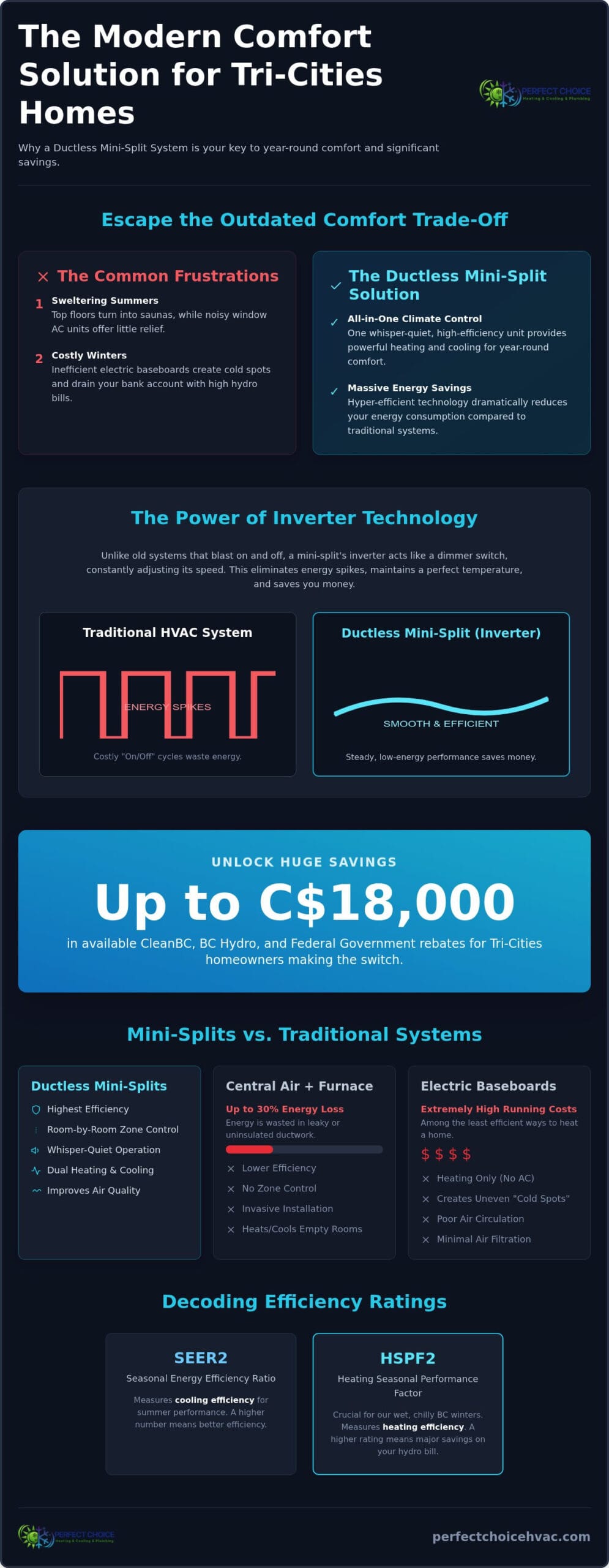
- Discover how inverter technology eliminates energy spikes, making ductless systems far more cost-effective than traditional electric baseboards.
- Get a clear roadmap for accessing up to C$18,000 in CleanBC and BC Hydro rebates available for local residents in 2026.
- Find out how to navigate complex strata bylaws and municipal noise regulations to ensure your installation is fully compliant.
- Understand the essential maintenance steps required to keep your new system running at peak performance for up to 20 years.
Understanding Mini-Split Systems in the Tri-Cities: A Modern Comfort Solution
A mini split system Tri-Cities BC homeowners choose is a high-efficiency HVAC solution designed specifically for properties where traditional ductwork isn’t feasible or desired. It consists of two primary parts: an outdoor condenser and one or more indoor air handlers. These units are linked by a slim conduit that houses the refrigerant lines, suction tubing, and power cables. Our local climate, characterized by mild, rainy winters and increasingly intense summer heatwaves, makes this technology a logical choice for year-round use. In many older Port Moody homes, residents rely on inefficient baseboard heaters that create cold spots. Installing a ductless system provides a modern alternative that skips the invasive construction and mess required for central air retrofits.
How Mini-Splits Differ from Central Air Conditioning
Central air systems often lose roughly 30% of their energy through leaky or uninsulated ductwork located in attics or crawlspaces. Mini-splits deliver conditioned air directly into the living space, removing that efficiency drain entirely. This setup enables precise “zoning” where you only pay to heat or cool the rooms you actually use. It’s a game-changer for multi-storey houses where the top floor often stays five degrees warmer than the main level during August. Additionally, the compact size of the outdoor unit is perfect for smaller Coquitlam lots or strata-managed townhomes where yard space is at a premium. You get the power of a full HVAC system without a massive metal box taking up your entire patio.
The Dual Function: Heating and Cooling in One
A mini-split isn’t just an air conditioner; it’s a sophisticated climate partner for every season. These systems function as heat pumps, which means they move thermal energy rather than creating it through combustion. You can explore the mechanics of How Heat Pumps Work to understand how they maintain efficiency even when it’s chilly outside. A specialized reversing valve inside the unit allows the refrigeration cycle to flip directions instantly. In the summer, the indoor evaporator pulls heat out of your home. In the winter, the outdoor condenser harvests heat from the BC air and brings it indoors. Even during local cold snaps, modern cold-climate models remain incredibly effective, ensuring your home stays cozy without the staggering costs of traditional electric resistance heating.
The Technology Behind Ductless Comfort: How Mini-Splits Work
The heart of a modern mini split system Tri-Cities BC homeowners install is the inverter-driven compressor. Unlike older HVAC systems that blast at 100% capacity and then abruptly shut off, an inverter acts like a dimmer switch. It modulates its speed to match the exact heating or cooling demand of the room. This prevents the massive energy spikes associated with traditional systems and keeps your indoor temperature rock-steady. It also enables precise zoning. You can keep a basement suite at 19°C for a tenant while your upstairs master bedroom stays a crisp 21°C, ensuring everyone stays comfortable without wasting energy on empty rooms.
The refrigeration cycle essentially acts as a heat sponge. Even when it’s -10°C in Coquitlam, there is still thermal energy present in the outdoor air. The system uses a specialized refrigerant to absorb that heat and move it inside. Beyond simple temperature control, these units serve as powerful air scrubbers. With BC wildfire seasons becoming more intense, the multi-stage filtration in ductless units helps trap fine particulate matter and common allergens. It ensures the air you breathe is as clean as it is comfortable. If you’re ready to upgrade your air quality, our team can help you select the right ductless mini-split systems for your specific floor plan.
Decoding Efficiency Ratings: SEER2 and HSPF2
SEER2 is the current 2026 industry standard for measuring cooling efficiency under real-world external pressure conditions. While SEER2 focuses on summer performance, HSPF2 (Heating Seasonal Performance Factor) is the metric that truly matters for our wet, chilly winters. A higher HSPF2 rating indicates that the system can extract more heat for every watt of electricity it consumes. Although units with higher ratings may have a higher initial purchase price, they typically offer a faster return on investment through significantly lower monthly BC Hydro bills.
Indoor Unit Styles: Beyond the Wall Mount
While many people picture a white box mounted high on a wall, modern technology offers several aesthetic options to fit your home’s decor.
- Floor-mounted units: These sit near the floor, much like a traditional radiator. They are ideal for replacing old electric baseboard heaters and provide excellent heat distribution at the ground level.
- Ceiling cassettes: These units recess into the ceiling for a low-profile, “disappearing” look. They are a popular choice for modern Port Moody renovations where wall space is at a premium.
- Slim-duct options: These units are hidden behind a bulkhead or tucked into a closet. They offer a “hybrid” feel, giving you the efficiency of a mini-split with the clean aesthetics of a central air system.
Comparing Mini-Splits to Traditional BC Heating and Cooling
Tri-Cities homes often feature a mix of heating technologies, from vintage electric baseboards in Port Coquitlam to modern natural gas furnaces in Burke Mountain. While these systems were standard for decades, they struggle to keep up with current energy costs and rising summer temperatures. Choosing a mini split system Tri-Cities BC homeowners can rely on offers a fundamental shift in how we manage indoor climates. Unlike traditional systems that generate heat through combustion or resistance, ductless units simply move existing heat from one place to another. This mechanical advantage results in significantly lower monthly operational costs for the average household.
The Performance Gap: Baseboards vs. Mini-Splits
Electric baseboard heaters are technically 100% efficient because they convert every watt of electricity into heat. However, a ductless mini-split can reach efficiency levels of 300% to 400%. For every dollar you spend on electricity, you get three to four dollars worth of heat. This is particularly vital for residents who frequently hit the Tier 2 BC Hydro rate, where electricity prices jump significantly after a certain threshold of use. Beyond the math, baseboards are notorious for creating “cold spots” in older Port Coquitlam houses. Because they rely on natural convection, heat often pools at the ceiling while the floor remains freezing. A mini-split uses active air distribution to ensure every corner of the room stays comfortable and warm.
Summer Cooling: Mini-Splits vs. Portable ACs
Many Tri-Cities condo owners turn to portable or window-mounted AC units when summer heatwaves hit. These are often the least efficient way to cool a space. They are loud, bulky, and require a window to be left partially open for an exhaust hose. This creates a security risk and allows hot, humid air to leak back inside. In contrast, a mini-split operates as quietly as a whisper, typically between 20 and 30 decibels. You can maintain a secure, sealed home while enjoying superior dehumidification and cooling performance.
For multi-storey homes on Burke Mountain, the comparison to central forced air is equally stark. Central systems often struggle to push air to the highest floors, leaving bedrooms uncomfortably warm even when the main floor is chilly. A ductless approach allows you to place units exactly where they are needed, providing independent control for each level of the house. Moving heat is always more cost-effective than creating it; making the switch to ductless is a smart financial move for the long term.
Navigating Strata Rules and BC Rebates for Mini-Split Installation
Investing in a mini split system Tri-Cities BC residents can rely on is more affordable in 2026 than ever before. Provincial and municipal incentives have reached record highs to encourage the shift toward electrification. However, accessing this funding requires more than just buying a unit. You must work with a CleanBC Registered Contractor to qualify for provincial rebates. This certification ensures your installer meets strict quality and safety standards, protecting your investment and your eligibility for thousands of dollars in savings.
The 2026 rebate landscape is generous but time-sensitive. Income-qualified households can access up to C$18,000 through the CleanBC Energy Savings Program. BC Hydro offers a base rebate of C$4,000, with a limited-time C$1,000 bonus for installations completed between August 1 and October 31, 2026. Residents in Coquitlam may also qualify for a C$2,000 municipal top-up. These grants often interact with federal funding for those switching from oil heating, provided the application is submitted before the July 31, 2026, federal deadline. Navigating these layers can be complex, but choosing a qualified expert simplifies the process. If you want to maximize your savings, our team at Perfect Choice HVAC can guide you through every application step.
Winning Strata Approval in Port Moody and Coquitlam
Strata councils often worry about three things: noise, appearance, and structural integrity. To win approval, you need a professional technical proposal. This should include the specific decibel rating of your outdoor unit to prove it meets local noise bylaws. Use vibration pads to eliminate sound transfer through the building envelope. You must also clarify if the outdoor unit sits on “exclusive use” common property, such as your balcony. Clearly showing how the refrigerant lines will be hidden in colour-matched “slim duct” covers often resolves aesthetic concerns before they become roadblocks.
The Importance of Professional Sizing
A “Manual J” load calculation is the only way to ensure your system fits your home’s specific needs. We analyze your window orientation, insulation levels, and local Tri-Cities humidity to determine the exact capacity required. An oversized system is a common mistake. It leads to “short-cycling,” where the unit turns on and off too quickly. This wears out the compressor and fails to remove humidity, leaving your home feeling clammy. We also perform a critical amperage check on your electrical panel. This confirms your home can safely handle the new load without requiring an expensive service upgrade.
Selecting the Right Mini-Split System for Your Tri-Cities Home
Selecting the right hardware is only half the battle. While several top-tier brands dominate the Pacific Northwest market, the best mini split system Tri-Cities BC homeowners can invest in is one backed by a robust local warranty. We recommend units specifically engineered for cold climates. These models continue to harvest heat efficiently even when the frost settles on the ground in Maple Ridge. Avoiding cheap DIY kits is essential. These often struggle with the high humidity levels of the BC coast, leading to premature component failure and voided warranties.
Longevity depends on consistent care. A well-maintained system can reliably serve your home for 15 to 20 years. You can handle the basics by rinsing the indoor mesh filters every month to maintain airflow. However, a professional technician should inspect the outdoor condenser and clear any debris from the drain lines at least once a year. This prevents water damage and ensures the system operates at peak efficiency during our summer heatwaves. Before you finalize your choice, follow this checklist:
- Free Estimate: Schedule a site visit to determine the exact heat load of your space.
- Brand Selection: Choose a model with cold-climate technology for BC winters.
- Electrical Audit: Confirm your panel has the capacity for a new dedicated circuit.
- Strata Approval: Secure written consent based on the technical specs of your unit.
Why Local Expertise Matters
Every neighbourhood in the Tri-Cities has a unique architectural character. From the high-ceiling renovations in Port Moody to the compact strata developments in Coquitlam, we understand the structural challenges of each property type. Our team provides the security of daily 7:00 AM–9:00 PM emergency support, ensuring you are never left without climate control during a rare cold snap. If your home already has existing ductwork that you’d prefer to utilize, you can explore Expert Air Conditioner Installation in Coquitlam for high-efficiency central alternatives.
Next Steps for Your Home Comfort
The process starts with a free, no-pressure in-home estimate. We visit your property in Port Coquitlam or Maple Ridge to perform the necessary load calculations and electrical checks discussed earlier. Most installations are completed in a single day, leaving your home clean and perfectly conditioned. Don’t wait for the next record-breaking heatwave to take action. Contact Perfect Choice HVAC today for a custom mini-split quote and start your journey toward a more efficient, comfortable home.
Take Control of Your Home Climate Today
Upgrading to a mini split system Tri-Cities BC homeowners can trust is about more than just beating the summer heat. It’s a strategic investment in year-round efficiency and long-term home value. By switching from outdated baseboards to ductless technology, you can slash your monthly energy bills while enjoying whisper-quiet climate control. We’ve explored how to navigate the 2026 rebate landscape and win over your strata council with the right technical data. Now, the next step is ensuring your installation is handled by a team that knows our local neighbourhoods inside and out.
As a CleanBC Registered Contractor with 8+ years of hands-on HVAC experience, we specialize in making these transitions seamless. We don’t just install equipment; we guide you through the entire rebate process to ensure you get every dollar you’re entitled to. Plus, our daily 7:00 AM–9:00 PM time-sensitive repair service means we’re always here when you need us most. You don’t have to settle for uneven temperatures or staggering electricity costs. Let’s make your home the most comfortable place it can be.
Get a Free Mini-Split Estimate from the Tri-Cities Experts
Frequently Asked Questions
Do mini-split systems work in freezing BC winters?
Modern cold-climate heat pumps are specifically designed to operate effectively in temperatures as low as -25°C. While Tri-Cities winters are generally mild, these units handle our occasional cold snaps without losing efficiency. They harvest thermal energy from the outdoor air even when it feels freezing to us. This ensures your home stays warm and cozy throughout the winter months without the need for expensive backup heating sources.
How much can I save on my BC Hydro bill with a mini-split?
Homeowners switching from traditional electric baseboard heating often see their heating costs drop by 50% or more. Because a mini split system Tri-Cities BC installation is up to 400% efficient, it uses significantly less electricity to provide the same amount of warmth. These savings are especially noticeable if your household frequently reaches the higher Tier 2 BC Hydro rates during the peak of winter or summer.
Are mini-splits allowed in Coquitlam condos?
Most Coquitlam condos allow ductless installations, provided you obtain written approval from your strata council first. Since the process involves modifying common property, you must submit a technical proposal that addresses noise levels and aesthetic impact. We help our clients by providing specific decibel ratings and placement plans that meet local bylaws. This proactive approach helps secure approval by proving the unit won’t disturb your neighbours.
What is the average lifespan of a ductless system in the Tri-Cities?
A high-quality ductless system typically lasts between 15 and 20 years when it’s professionally installed and maintained. The coastal climate in BC is relatively kind to outdoor units, but regular care is still vital. Keeping the outdoor condenser clear of debris and ensuring the indoor filters stay clean will maximize the life of your compressor. This longevity makes it one of the most reliable long-term investments for your property.
Does a mini-split system require a lot of maintenance?
Maintenance is straightforward and doesn’t require a significant time commitment. You should rinse the indoor unit’s reusable mesh filters every four to six weeks to maintain optimal airflow. Beyond that, we recommend a professional inspection once a year. A technician will check refrigerant levels, clean the outdoor coils, and ensure the condensate drain is clear. This simple routine prevents unexpected breakdowns and keeps the system running at peak performance.
Can one outdoor unit power multiple rooms in my house?
Yes, a single outdoor condenser can power multiple indoor air handlers through a multi-zone configuration. You can connect several indoor units to one outdoor compressor, depending on the model’s total capacity. This allows you to set different temperatures for your living room, basement suite, and bedrooms independently. It’s an ideal solution for Tri-Cities homes that need targeted climate control across several floors without cluttering your exterior space.
How long does a typical mini-split installation take in the Tri-Cities?
A standard single-zone installation is usually completed in just one day. Our team arrives in the morning to mount the indoor unit, place the outdoor condenser, and run the necessary refrigerant lines. Multi-zone systems for larger homes might take two days depending on the complexity of the layout and the number of heads. We prioritize a clean workspace and ensure your system is fully tested and explained before we finish.
Do I need a backup furnace if I install a mini-split heat pump?
In our local climate, a modern cold-climate mini-split is usually sufficient as a primary heat source. You don’t typically need a backup furnace because these units remain effective well below our local record lows. However, some homeowners choose to keep their existing baseboards as a secondary emergency option for peace of mind. We evaluate your home’s insulation and heat loss to determine if a standalone ductless system is right for you.